Glossary
A definitions library for the curious cook — from al dente to zest, and quite a few surprises in between.
Please note: the book is a glossary of definitions only — it does not contain recipes, and not every entry has an associated image. Images and recipes on this site are companion material added by Dr. D.

It is stronger than baking powder, but it cannot work on its own. It needs something acidic — buttermilk, yoghurt, lemon juice, or vinegar — to trigger the bubbles that make things rise. It also neutralises acidity, which is why it makes chocolate cake taste less sharp and more rounded. Do not swap it for baking powder without adjusting the recipe.

One of those ingredients that does its work invisibly. You will not taste bay the way you taste garlic — it just makes everything around it taste more complete. Add it at the start of a long cook and remove it before serving.

French for kneaded butter — raw butter and flour worked together until smooth. Whisk small pieces into a simmering sauce, and it thickens gradually without going lumpy, which is the advantage over adding flour directly. It is the emergency rescue for a sauce that is too thin when you are nearly ready to serve. Keep some in the fridge, and it is ready when you need it. Bind just say it To add an ingredient that holds a mixture together so it does not fall apart during cooking or serving. Burgers fall apart without a binder. Fish cakes collapse. Meatballs crumble. Egg is the most common fix, followed by breadcrumbs or starch. It works by setting during cooking and holding everything into a cohesive whole. This step is not optional.

Regular melted butter is fine. Brown butter is something else entirely. The milk solids cook slowly until they turn golden and smell like toasted hazelnuts. Take it off the heat immediately at that point — it goes from brown to burnt in seconds. Pour it over fish, pasta, vegetables, or cake batter, and it adds a warm, nutty richness that plain butter cannot touch.

The pronunciation trips people up constantly — it is broo-SKET-tah, not broo-SHET-tah. The CH in Italian makes a K sound. Worth knowing before you order it in front of Italians. The bread should be properly toasted, and the garlic rubbed while still warm.

Cut into it, and the middle runs out like thick cream. Richer and softer than mozzarella and considerably more dramatic at the table. Menus love it because it looks impressive and costs more than it probably should.

Caprese is the definition of “simple done well.” If your tomatoes are watery and your mozzarella is rubbery, the whole thing collapses. But with ripe tomatoes, fresh buffalo mozzarella, and good olive oil, it becomes one of the best things you can eat. There is nowhere to hide in this dish.

Coarse salt seasons meat beautifully because it dissolves slowly. Coarse pepper has more punch than the powdered stuff. Coarsely chopped vegetables give dishes a rustic feel. “Coarse” usually means the texture is part of the charm.


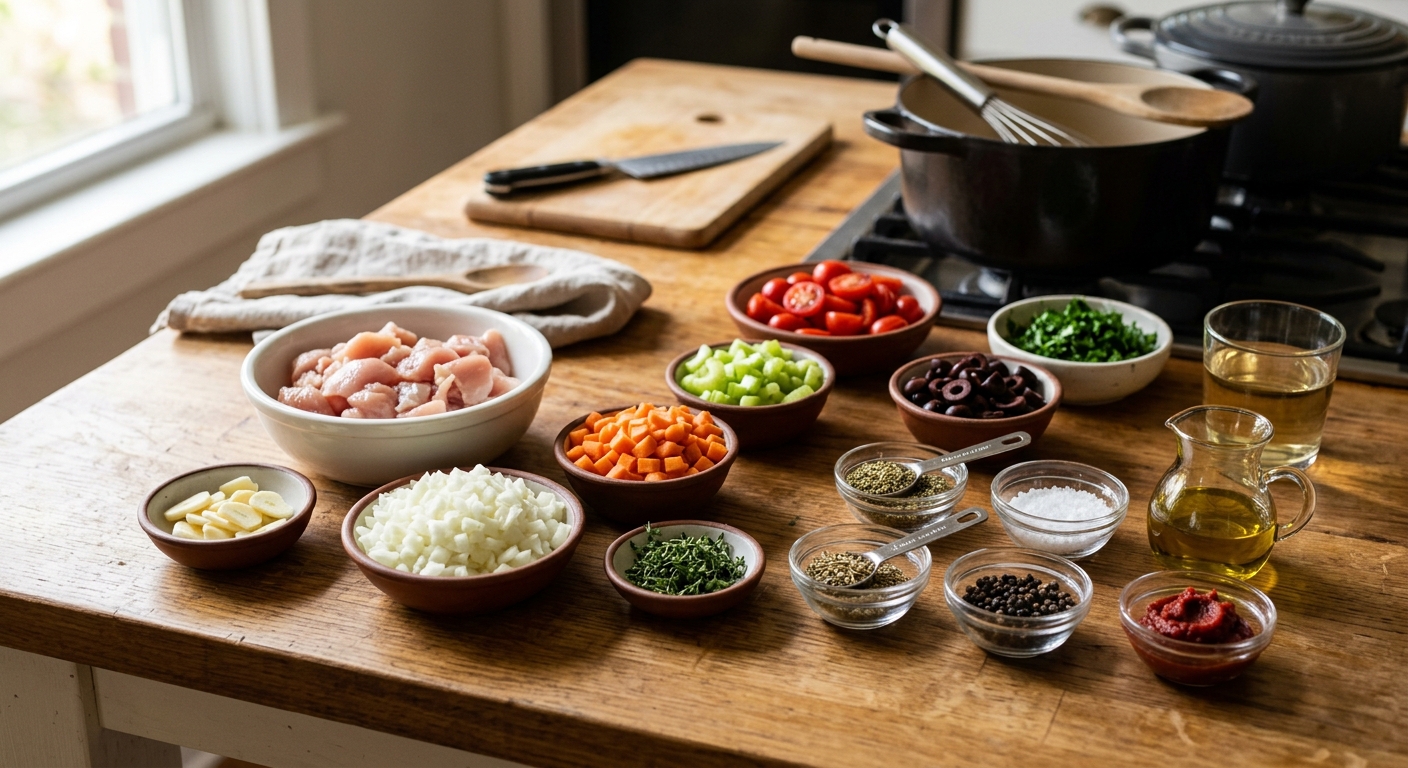


Not a precise measurement and not meant to be. A pinch of salt is the amount you naturally pick up between two fingers — roughly one sixteenth of a teaspoon if you want to be pedantic about it, which recipes that say pinch generally do not. It means a small amount, used to season or adjust rather than as a primary ingredient. When a recipe says a pinch of saffron, it means exactly enough to colour and flavour — saffron is expensive, and a pinch goes further than you would expect.

The ancestor of most soups in Western cooking. A potage is not delicate — it is nourishing, substantial, and meant to be a proper course rather than a preamble. In historical cooking, it was often the main meal itself. On a modern menu, it usually refers to a thick, smooth, or chunky soup made with vegetables, pulses, or both, properly seasoned and served hot.


Two jobs, one tool. Used dry, it removes lumps from flour, icing sugar, or cocoa and adds a little air in the process. Used wet, it strains stocks, sauces, and custards to remove solids and produce a smooth result. A fine mesh sieve produces cleaner results than a coarse one.

The temperature at which an oil begins to smoke and break down. In plain English: Different oils handle heat differently, and choosing the wrong one affects both flavour and safety. Butter and extra virgin olive oil have low smoke points and are better for gentle cooking and finishing. Refined oils — vegetable, sunflower, rice bran — have high smoke points and are better for frying and searing. An oil that has begun to smoke has started to degrade and will make food taste bitter. If the oil smokes in the pan, discard it and start again with a lower heat.

It looks like pale peanut butter and has a nutty, slightly bitter, rich flavour. On its own, it can be intense, but mixed with lemon juice, garlic and water, it turns into a smooth, creamy sauce that goes with almost everything. It is the ingredient that makes hummus taste like hummus rather than just mashed chickpeas.

Italian for pick me up — the coffee and the richness of the mascarpone cream do the actual picking up. The sponge fingers — savoiardi — are dipped briefly in espresso mixed with Marsala or another spirit, layered with the cream, and chilled for several hours. The dusting of cocoa on top provides bitterness that cuts through the richness. It is a dessert that improves significantly if made the day before and given time in the fridge.