Glossary
A definitions library for the curious cook — from al dente to zest, and quite a few surprises in between.
Please note: the book is a glossary of definitions only — it does not contain recipes, and not every entry has an associated image. Images and recipes on this site are companion material added by Dr. D.
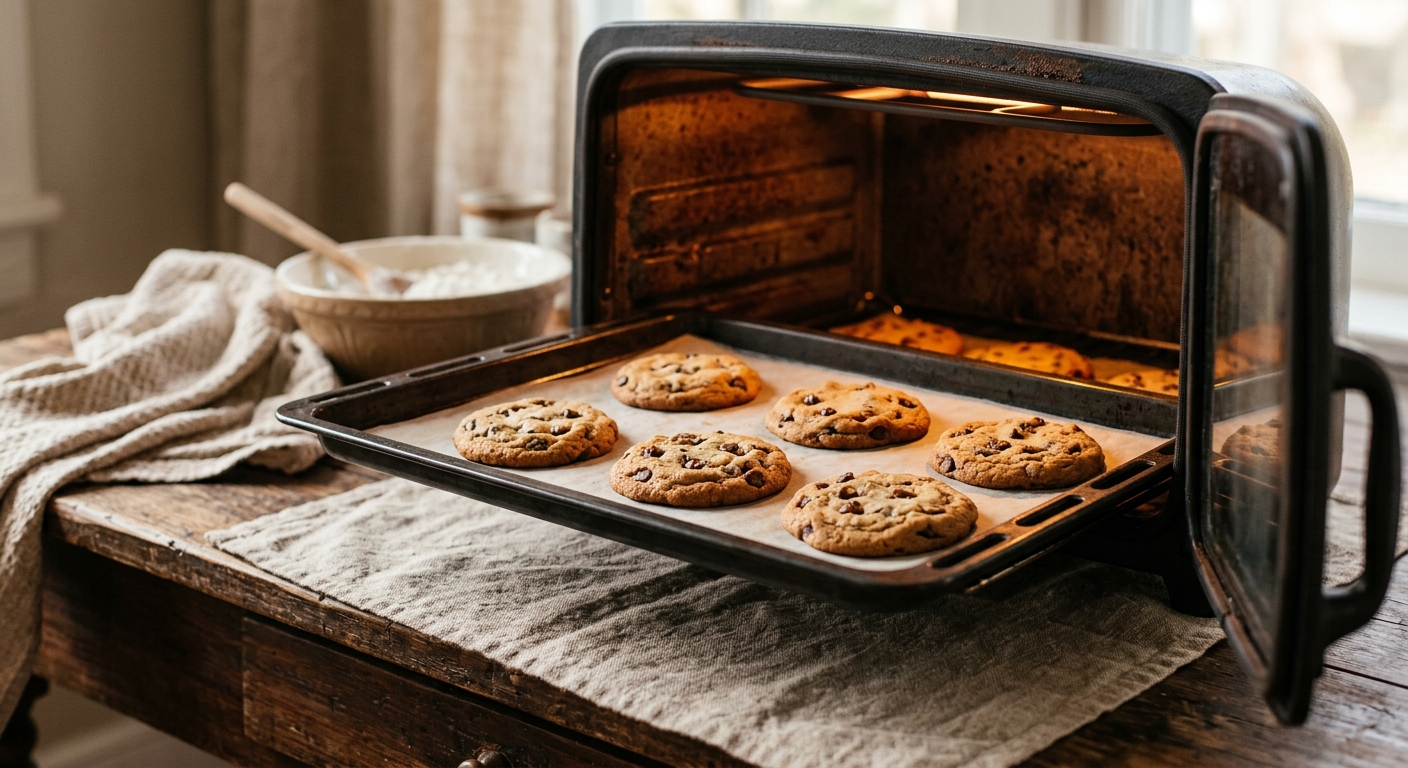
You put food in the oven, where heat surrounds it from all sides. No liquid, no direct flame, and no stirring required. Bread bakes. Cakes bake. Lasagne bakes. When a recipe says "bake," it means the oven — and it will tell you the temperature and time. Follow those instructions, and you will be fine.
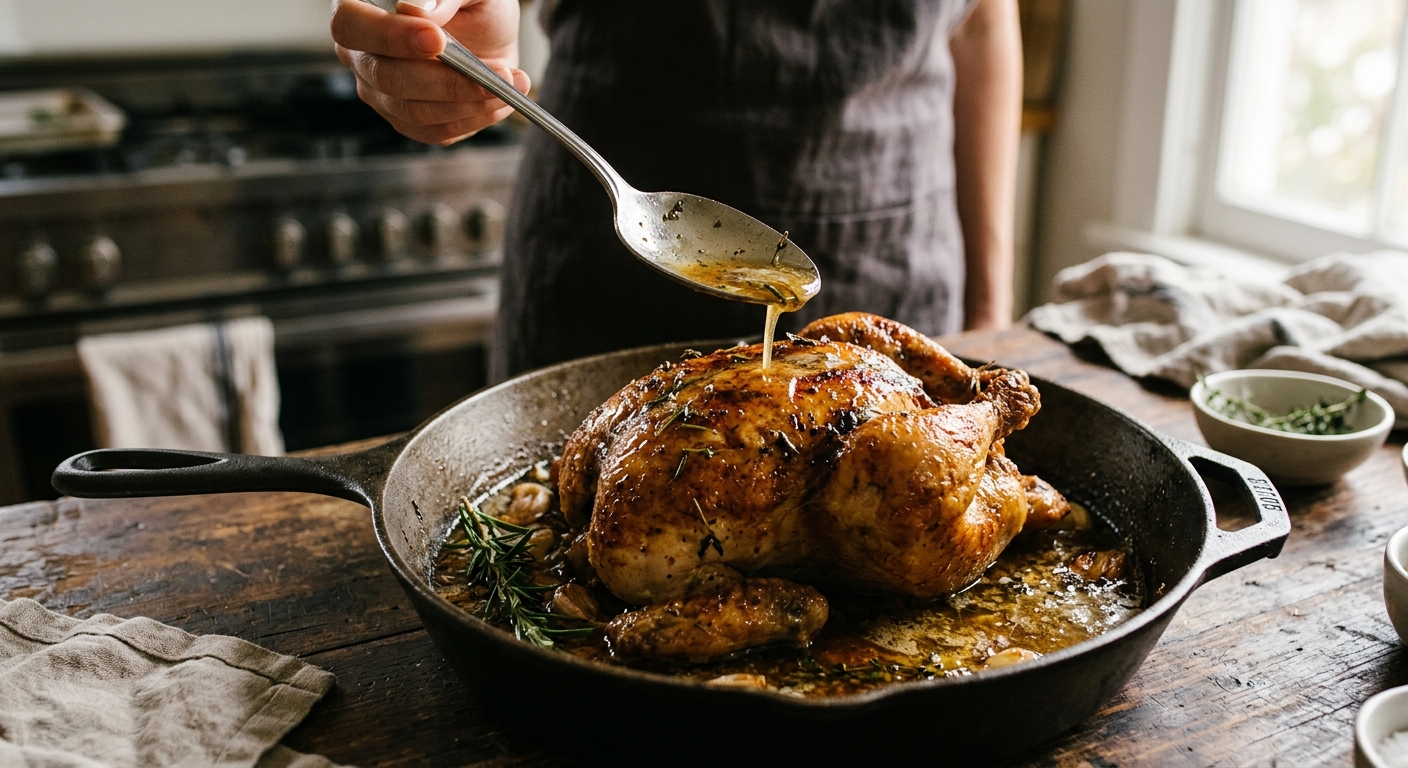
Every time you open the oven and spoon hot fat over a roasting chicken, you are basting it. The liquid keeps the surface from drying out and builds the colour and crust you want. It requires you to do something during cooking rather than walk away, which not everyone enjoys.

Beating is more energetic than stirring and more purposeful than folding. When a recipe says beat the butter and sugar, keep going until they are pale, fluffy, and increased in volume — this takes several minutes. When it says beat the eggs, whisk until combined and slightly frothy.

Thirty seconds in boiling water turns green beans bright and just tender. The ice bath instantly stops the cooking, so they do not go soggy. Blanching also loosens the skins on tomatoes and peaches so they slip off easily, and it is the first step before freezing vegetables so they keep their colour. It sounds like an unnecessary extra step.
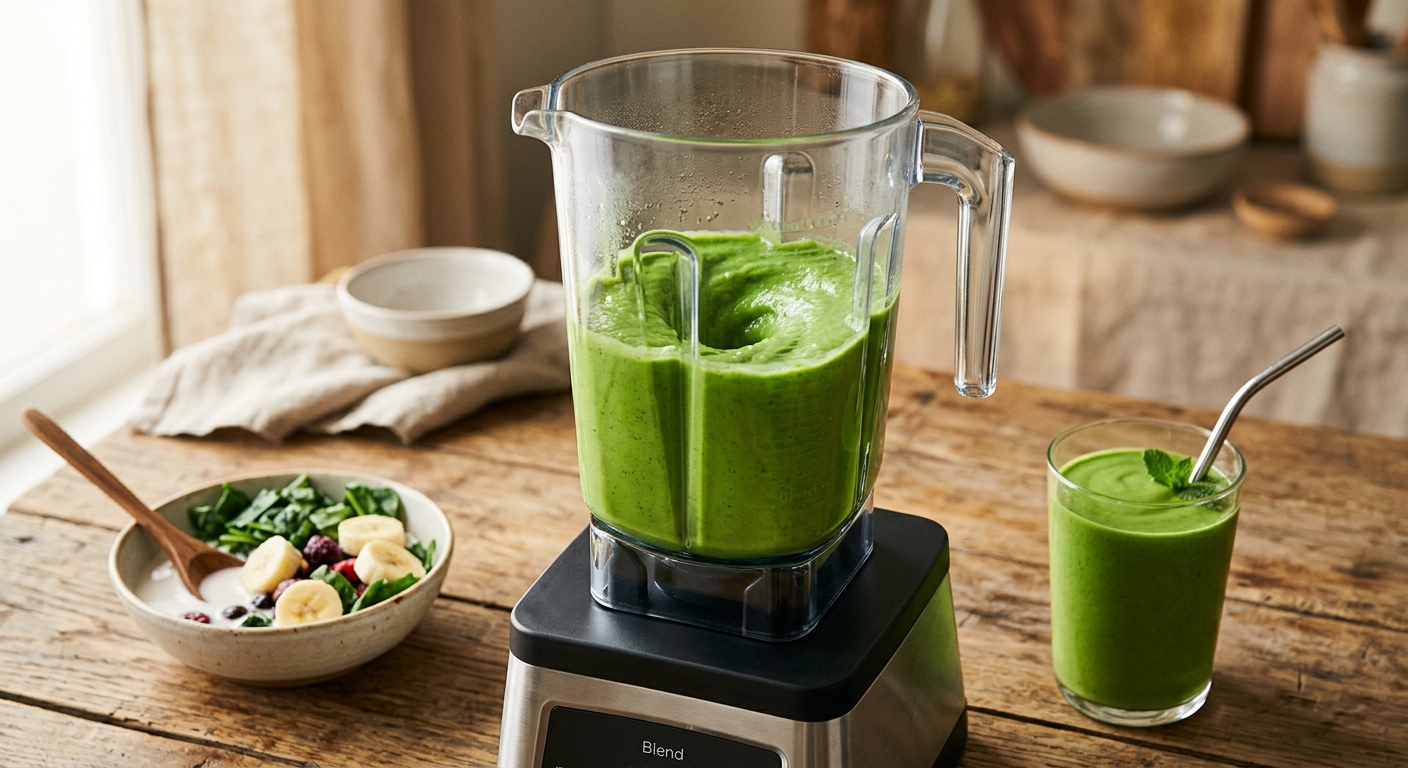
Blending turns chunks into something uniform — soup into velvet, fruit into smoothies, nuts into butter. A stick blender does the job in the pot. A jug blender produces smoother results. Important rule: do not fill a hot blender more than halfway, put the lid on firmly, and hold it down. Hot liquid expands and will redecorate your kitchen ceiling if you are not careful.
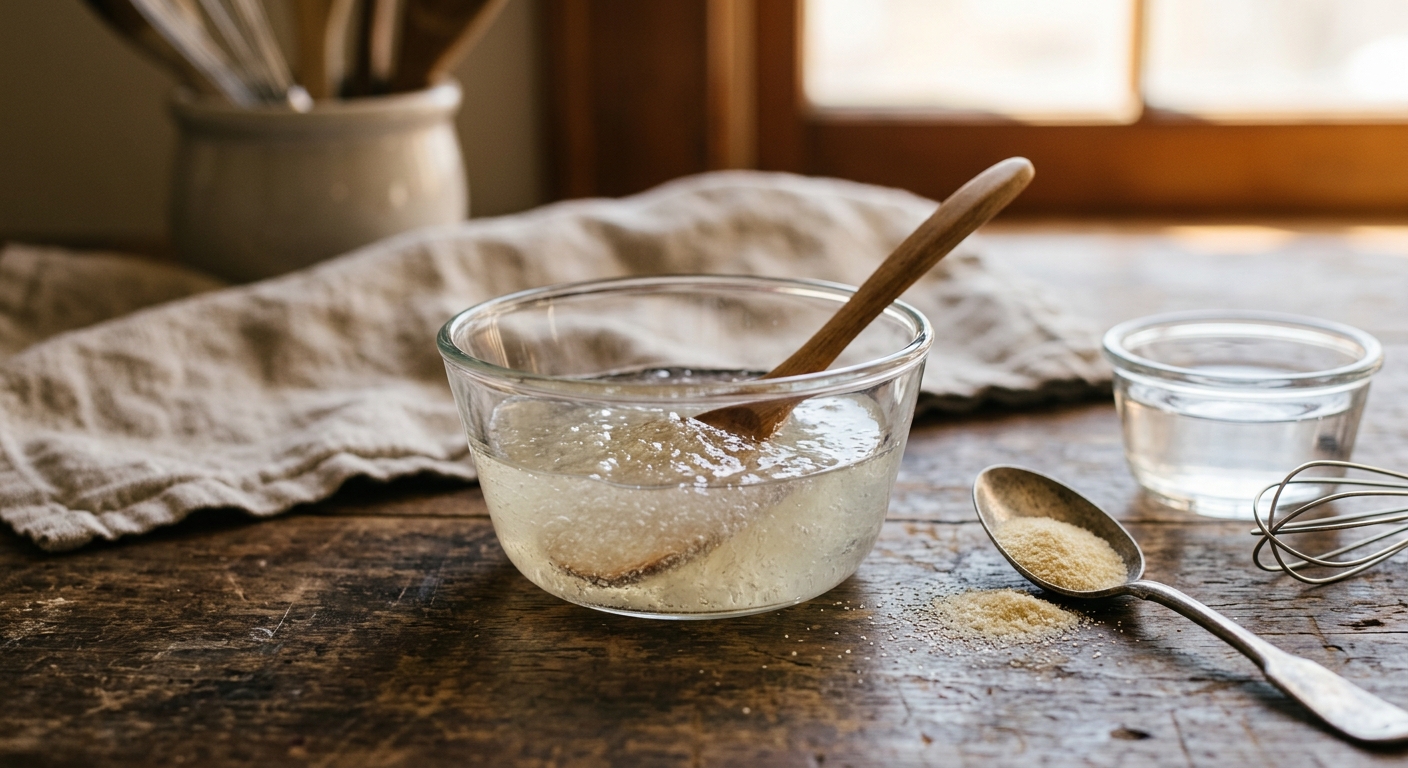
Two techniques share one name. Blooming gelatine means letting it absorb liquid and swell before dissolving — skip this, and you get lumps. Blooming spices means heating them briefly in fat so their oils are released and the flavour intensifies.

The most aggressive form of wet cooking. A full boil is rapid, turbulent, and unmistakable — not a gentle simmer with a few bubbles. Good for pasta, which needs agitation to cook evenly. Less good for most other things, which toughen or fall apart under that treatment. Many recipes say bring to the boil, then reduce to a simmer, which is the right move. The boil gets things started.
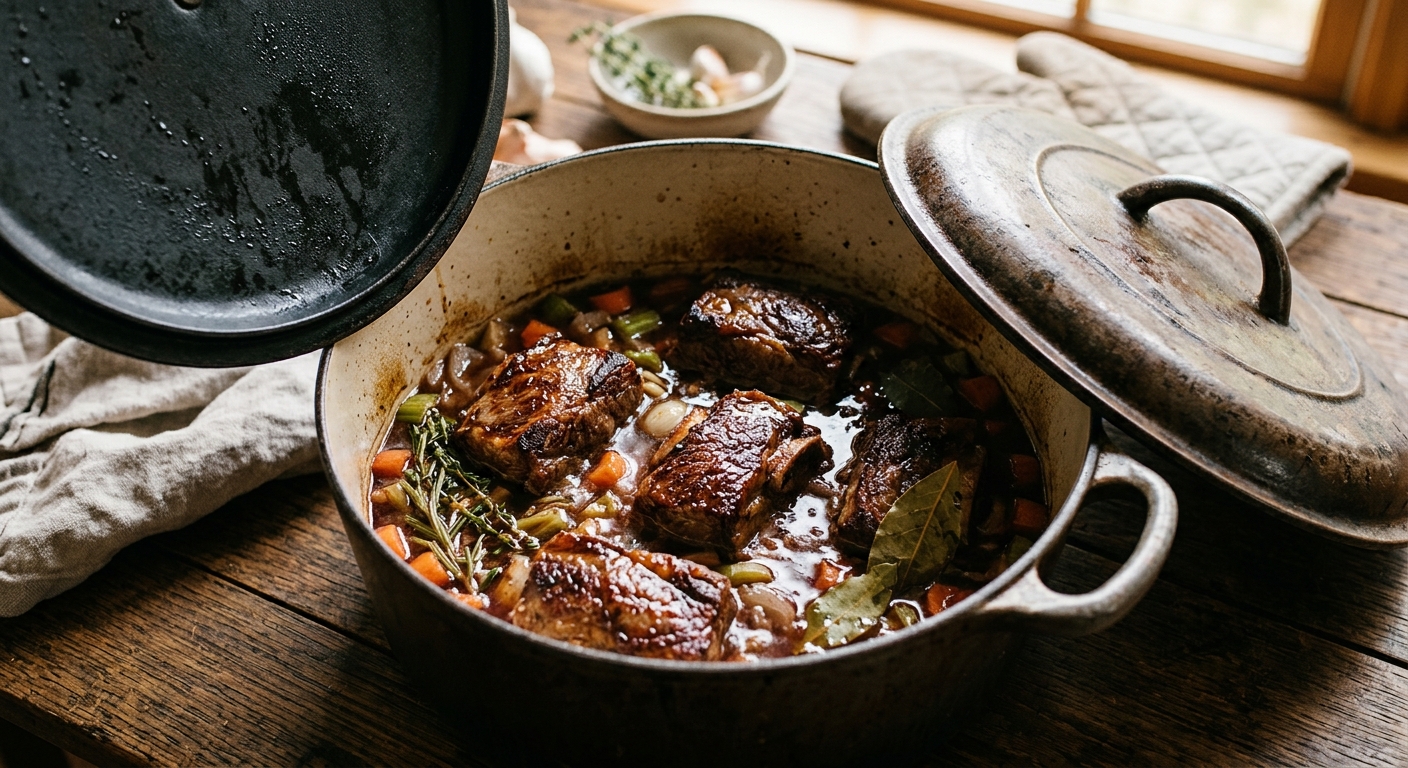
The technique that turns tough, cheap cuts into something extraordinary. The initial browning builds flavour on the surface. The long, slow covered cook breaks down connective tissue until the meat is tender enough to pull apart with a spoon. Shoulder, shin, cheek, brisket — all the cuts that would be unpleasant roasted quickly become magnificent braised slowly. The liquid becomes the sauce. Nothing is wasted.

Browning is not burning. It is a chemical reaction between proteins and sugars on the surface of food that creates hundreds of new flavour compounds — the deep, savoury taste of a seared steak or a roasted potato. A grey boiled piece of meat and a properly browned one contain the same ingredients. They are completely different eating experiences.

A thick chicken breast takes ages to cook through and often dries out on the outside before the middle is done. Butterfly it — slice it almost in half and open it out — and it is half the thickness, cooks in half the time, and stays juicy. It sounds like a technique. It is really just common sense with a knife.
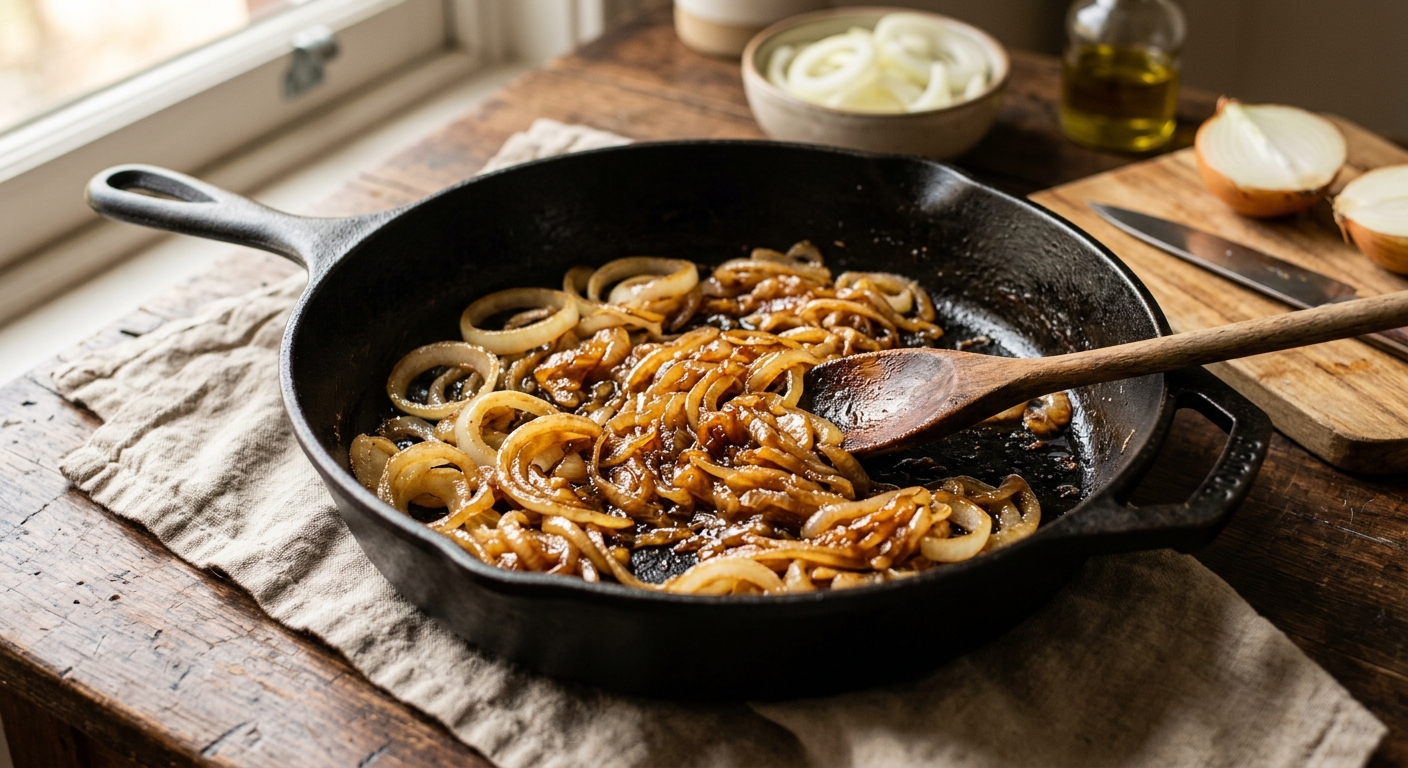
Caramelising onions takes far longer than most recipes admit — think forty minutes, not ten. But the reward is a deep, sweet, jammy flavour that can’t be faked. Sugar caramelises when it gets hot enough; proteins brown through the Maillard reaction, which is similar but not the same. Caramelised and browned are cousins, not twins.

Chilling is not “leaving it on the bench for a bit.” The fridge needs time to cool the centre, not just the outside. Cheesecakes, pastry, and ganache all depend on proper chilling. Rushing this step leads to collapse, melting, or general disappointment.

“Chop the onion” is the vaguest instruction in cooking. Rough chop for long stews, fine chop for quick sauces. Uniform pieces cook evenly; random pieces cook unpredictably.
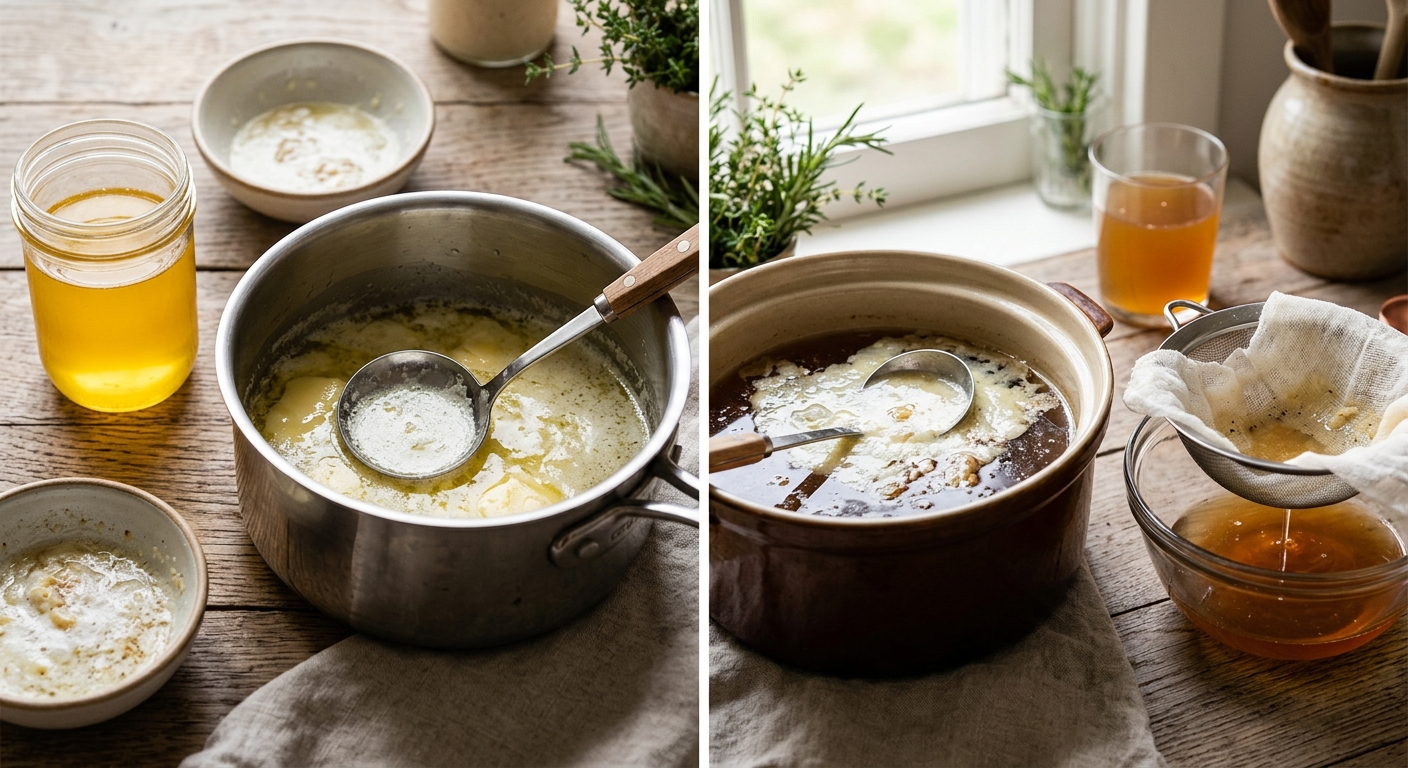
Clarified butter is pure golden fat that won’t burn easily. Clarified stock becomes consommé — clear enough to read through. Clarifying is cooking’s version of tidying up. It removes the cloudy bits and leaves the good stuff.
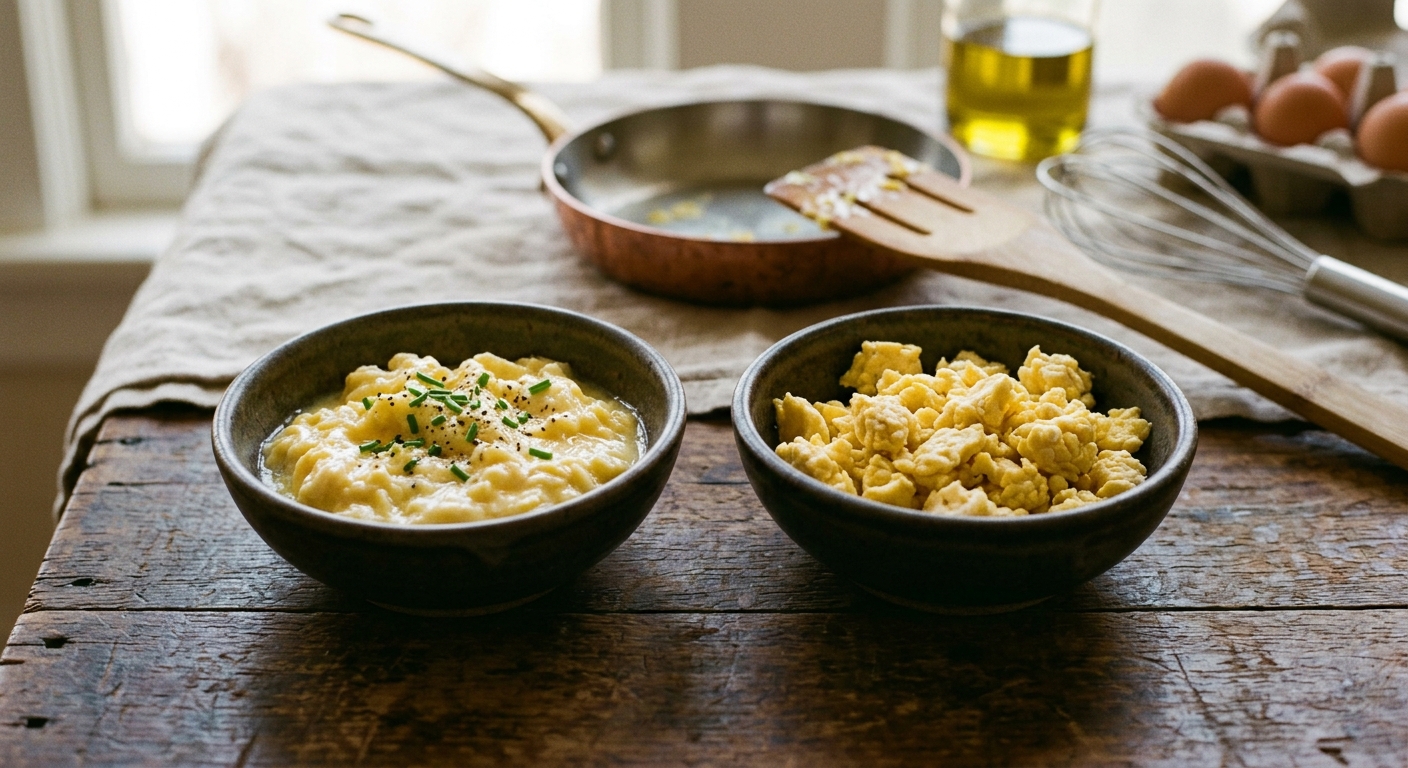
Coagulation is what turns a runny egg into a cooked one. It’s also why custard thickens and meat firms up. Too much heat makes everything tighten too much — scrambled eggs go rubbery, custard splits, and meat toughens. Gentle heat gives silky results.
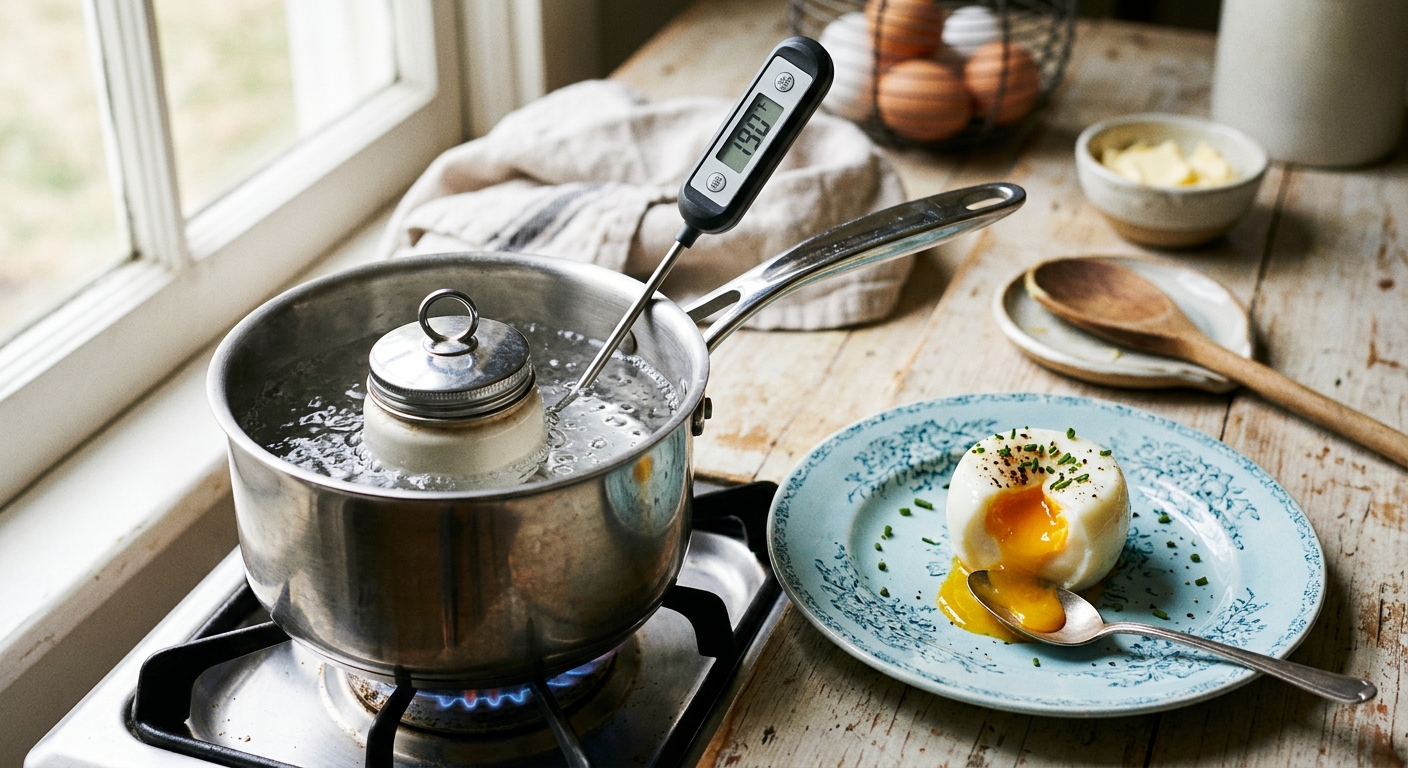
A coddled egg is barely set — the white soft, the yolk warm and runny. It’s more refined than a boiled egg and gentler than a poached one. The technique requires patience and low heat. Fruit can be coddled too, keeping its shape while softening.

This instruction sounds obvious, yet still causes chaos. Cooked through means the middle is safe, not just the outside looking confident. Chicken should be white to the bone with clear juices; burgers should have no pink at all. A cheap probe thermometer removes all doubt and all arguments.
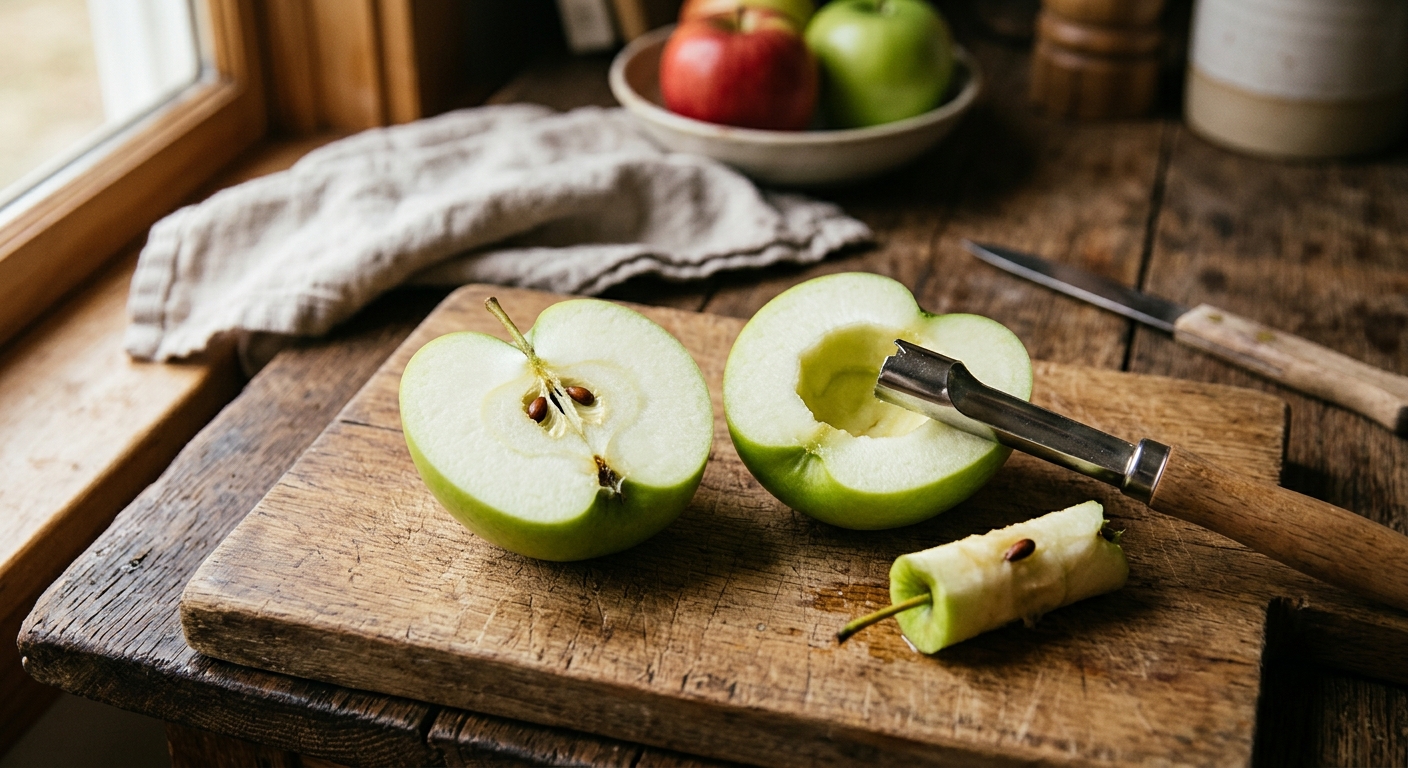
Coring an apple or a pear removes the hard, stringy centre that nobody wants to chew. A proper corer makes the job quicker and tidier. Peppers need coring too — the white pith and seeds are bitter and unwelcome. It’s basic prep, but skipping it leaves something unpleasant behind.

Creaming is the step everyone rushes through and shouldn’t. The mixture should go from yellow and dense to almost white and cloud-like. That trapped air is what makes the cake rise beautifully. Stop too soon, and the cake turns out heavy and sulky.

Curing is what turns pork belly into bacon and salmon into gravlax. Salt pulls out moisture and keeps bacteria away. Smoke adds flavour and helps preserve. Time does the rest.

Cutting in is how you make pastry that flakes instead of sulks. The butter must stay cold and in little pieces — those melt in the oven and create layers. Warm hands melt the butter too soon, turning everything greasy. Work quickly or use a pastry cutter. A chilled bowl helps more than you’d think.

A whole fish looks impressive; a deboned fish is far easier to eat. A whole chicken roasts beautifully; a deboned one can be rolled, stuffed, and sliced neatly. Fishmongers debone fish in seconds — let them. For chicken, a sharp knife and patience do the job.
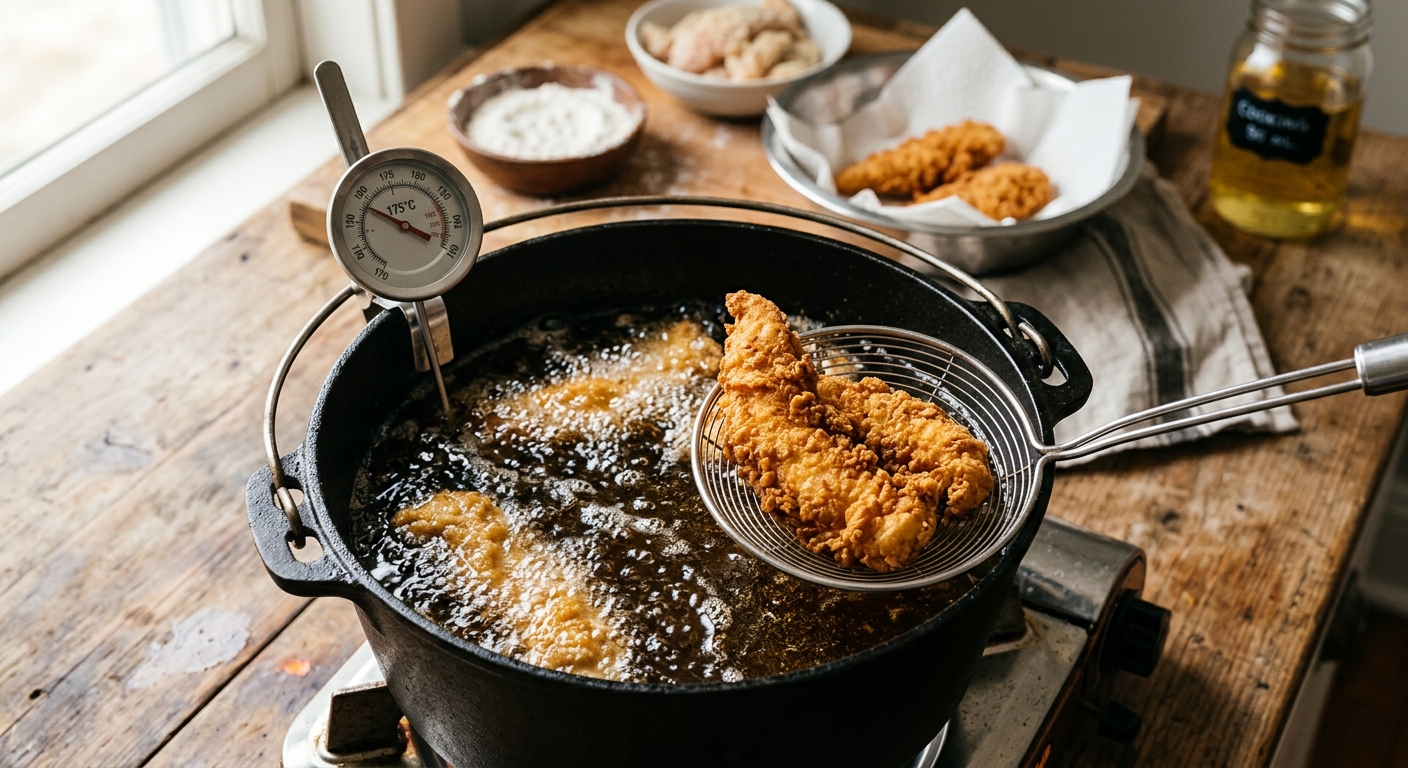
Deep‑frying is responsible for many of life’s greatest joys — chips, fried chicken, doughnuts, tempura. The oil must be hot enough, or everything turns greasy and sad. A thermometer helps more than pride will admit. Do not overcrowd the pan or the temperature drops instantly.
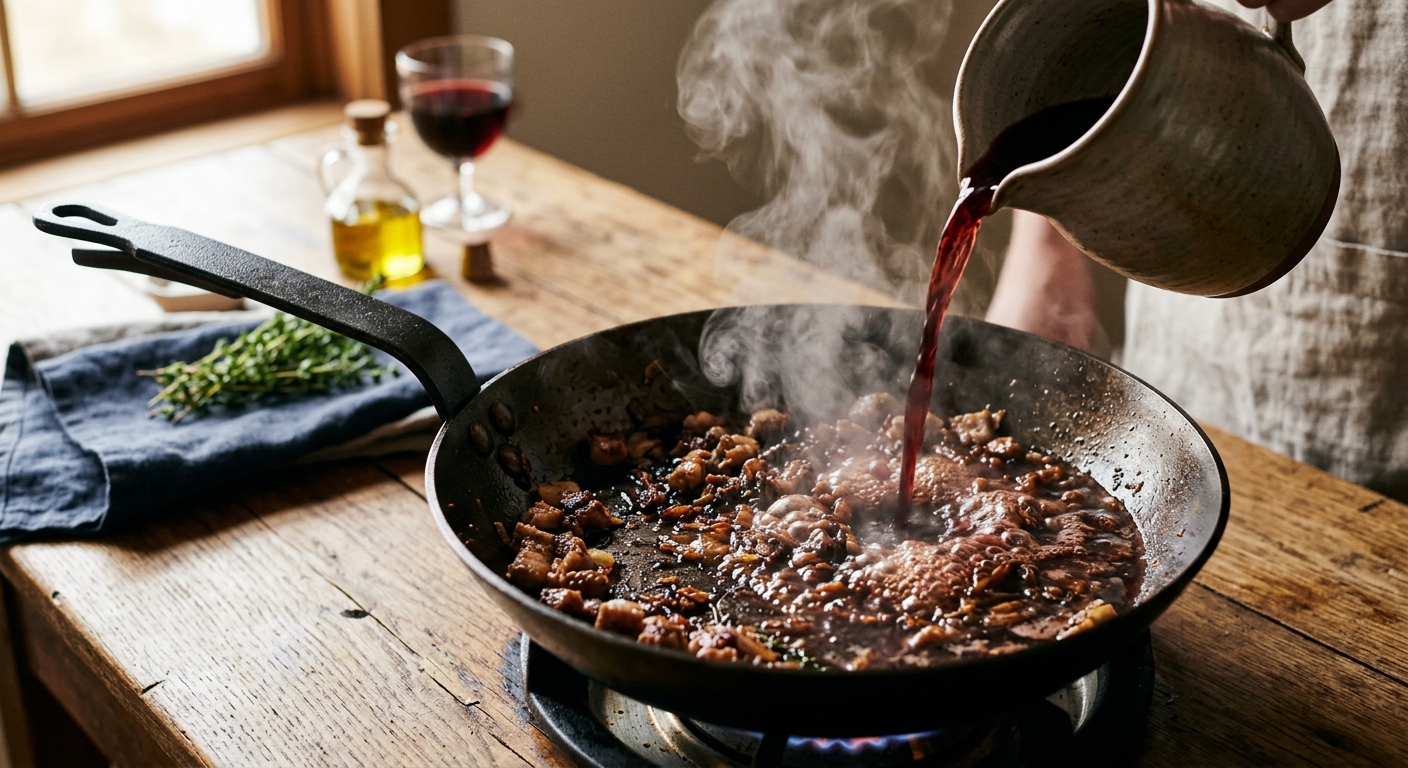
Those dark sticky bits on the pan are not burnt — they’re flavour gold. Add liquid, and they lift instantly, turning into a sauce that tastes as though you worked much harder than you did. Scrape, stir, reduce — that’s the whole technique. It takes two minutes and transforms a dish.
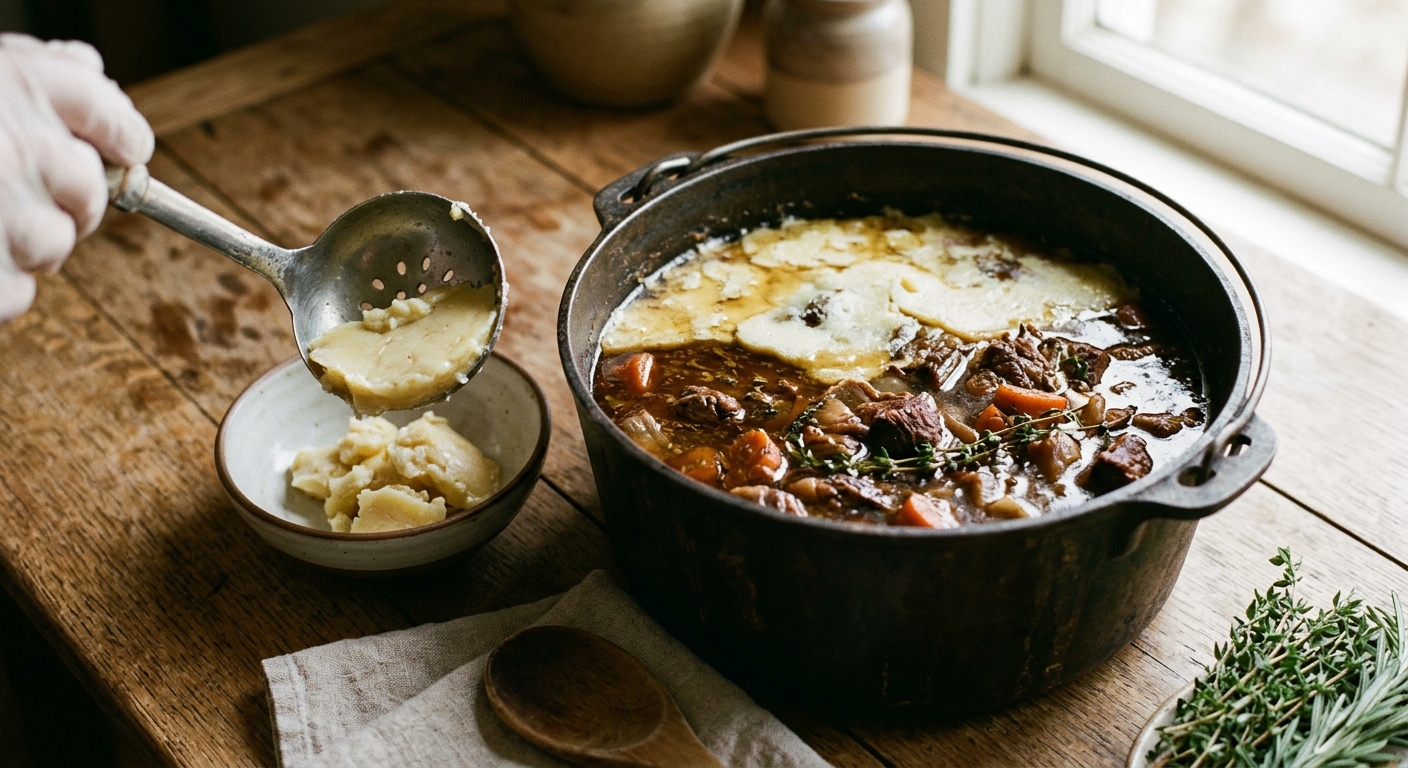
Stews, stocks, and braises always release fat, which floats to the top like it owns the place. The easiest method is chilling overnight — the fat solidifies and lifts off in one satisfying piece. If you need it now, tilt the pan and skim, or drag a piece of kitchen paper across the surface. Removing the fat makes the sauce taste brighter and less heavy.

The dark line on a prawn’s back is its digestive tract — not dangerous, just not appetising. A shallow cut and a quick lift with the knife tip removes it. Small prawns barely have anything to remove; big ones definitely do. Most ready‑to‑cook prawns are already deveined.
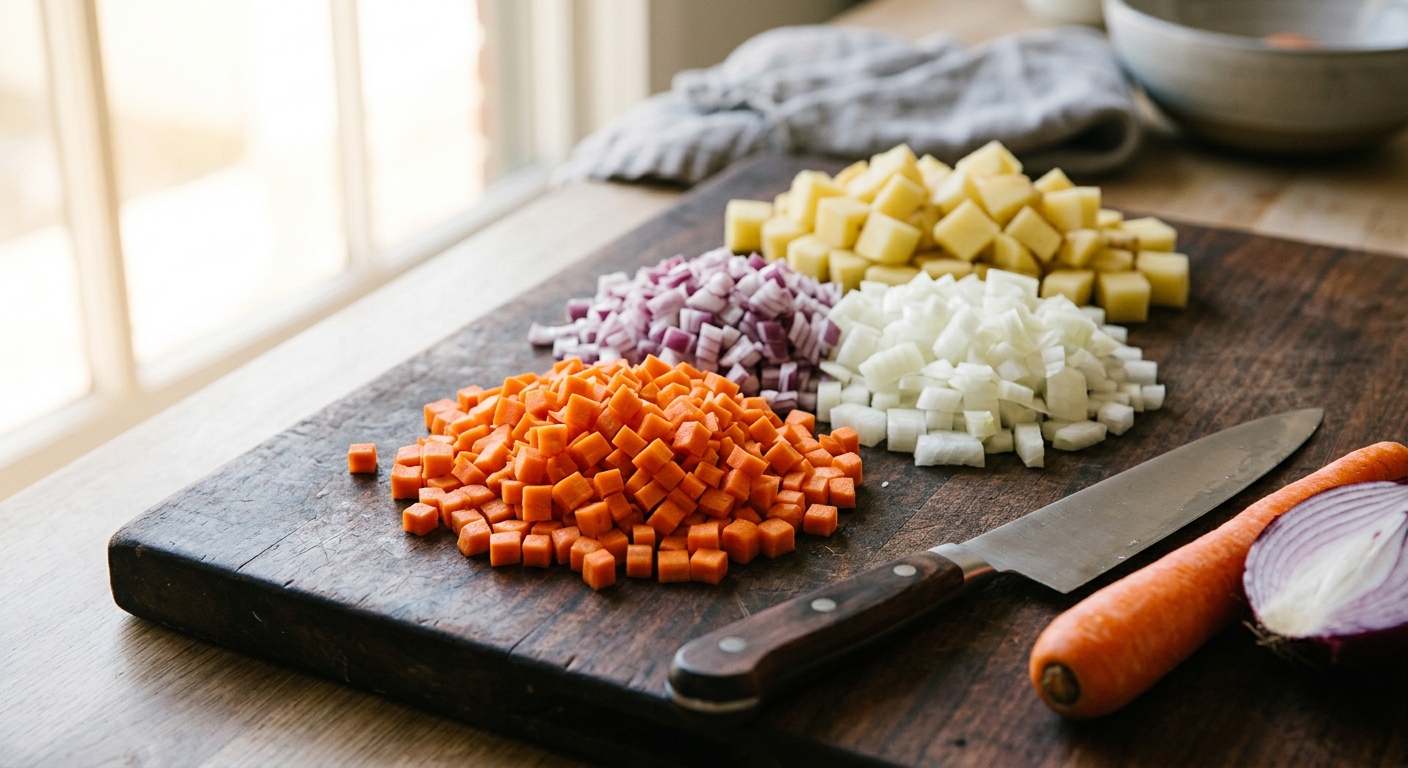
Dicing is chopping with ambition. Chopped is approximate; diced means actual cubes. Even pieces cook evenly and look better on the plate. Small dice is tiny, medium dice is neat, and large dice is generous.
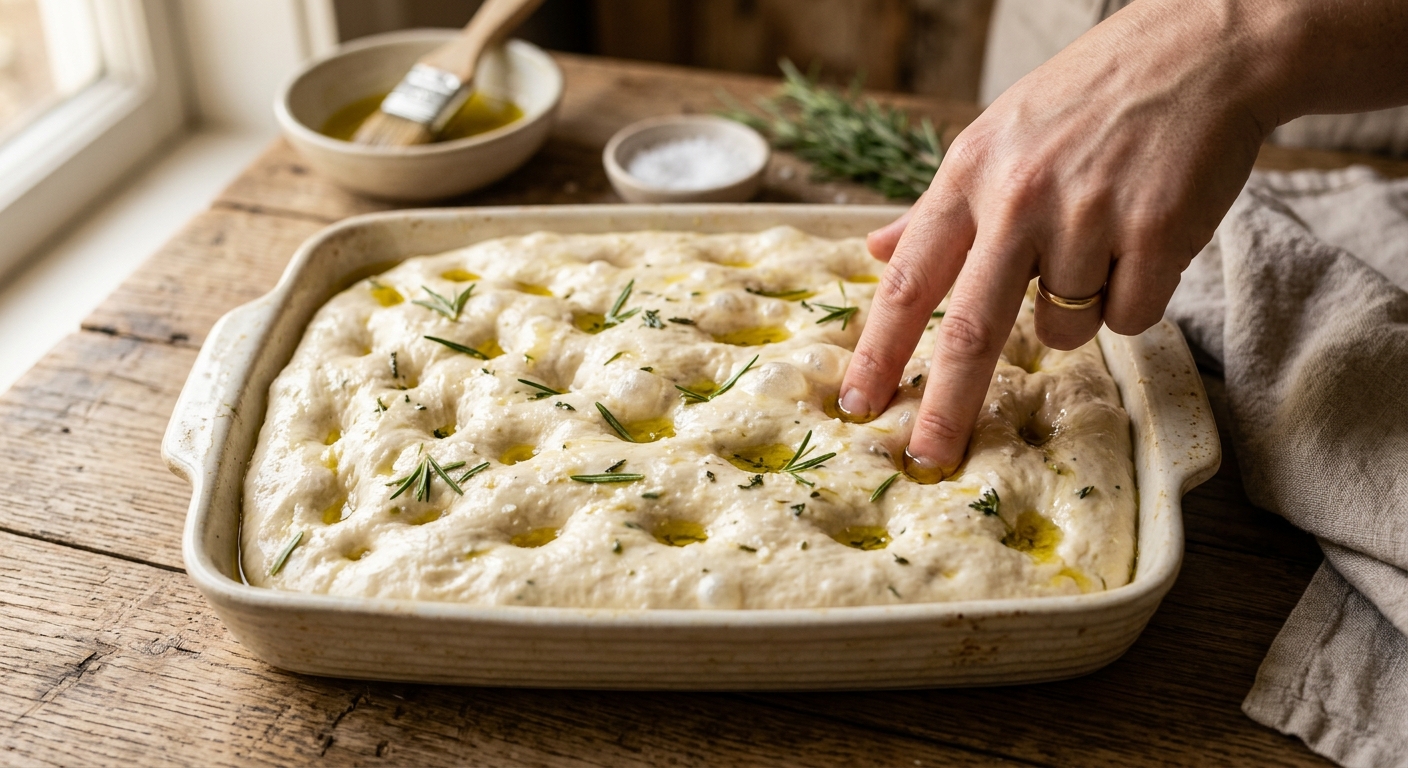
Focaccia gets its signature look from enthusiastic dimpling. The hollows catch olive oil, rosemary and salt, giving flavour in every bite. The dimples also help create an open, airy texture. Press firmly with oiled fingers — timid dimpling achieves nothing.
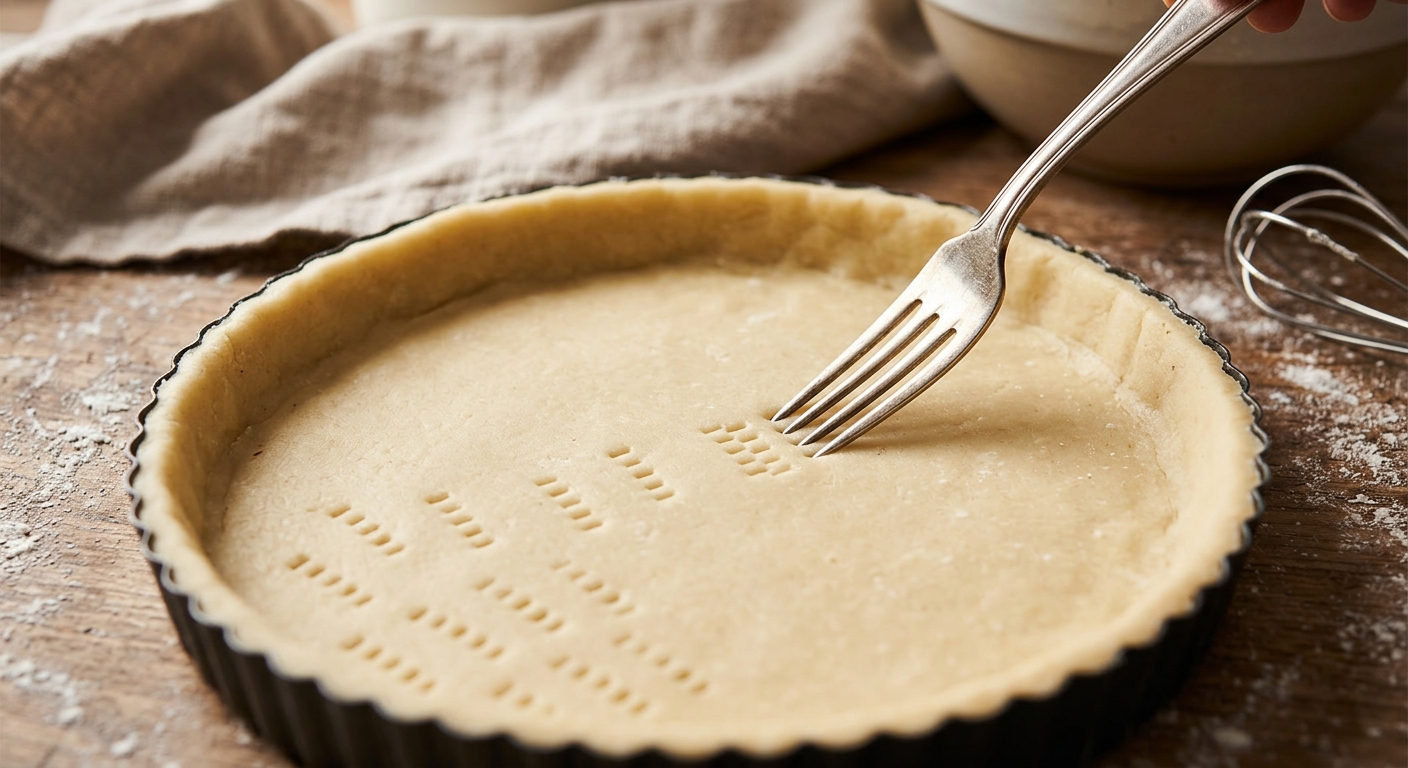
Docking stops your pastry base from inflating like a trampoline. A quick fork‑attack gives steam an escape route and prevents bubbling. It takes ten seconds and saves a lot of frustration. Pie weights do a similar job, but docking is faster for simple tart cases.

Dredging in flour before frying gives a thin, crisp coating that browns beautifully. Breadcrumbs create a thicker, crunchier crust. Icing sugar on doughnuts or churros adds sweetness and a delicate finish. The technique is simple: coat, shake off excess, cook.
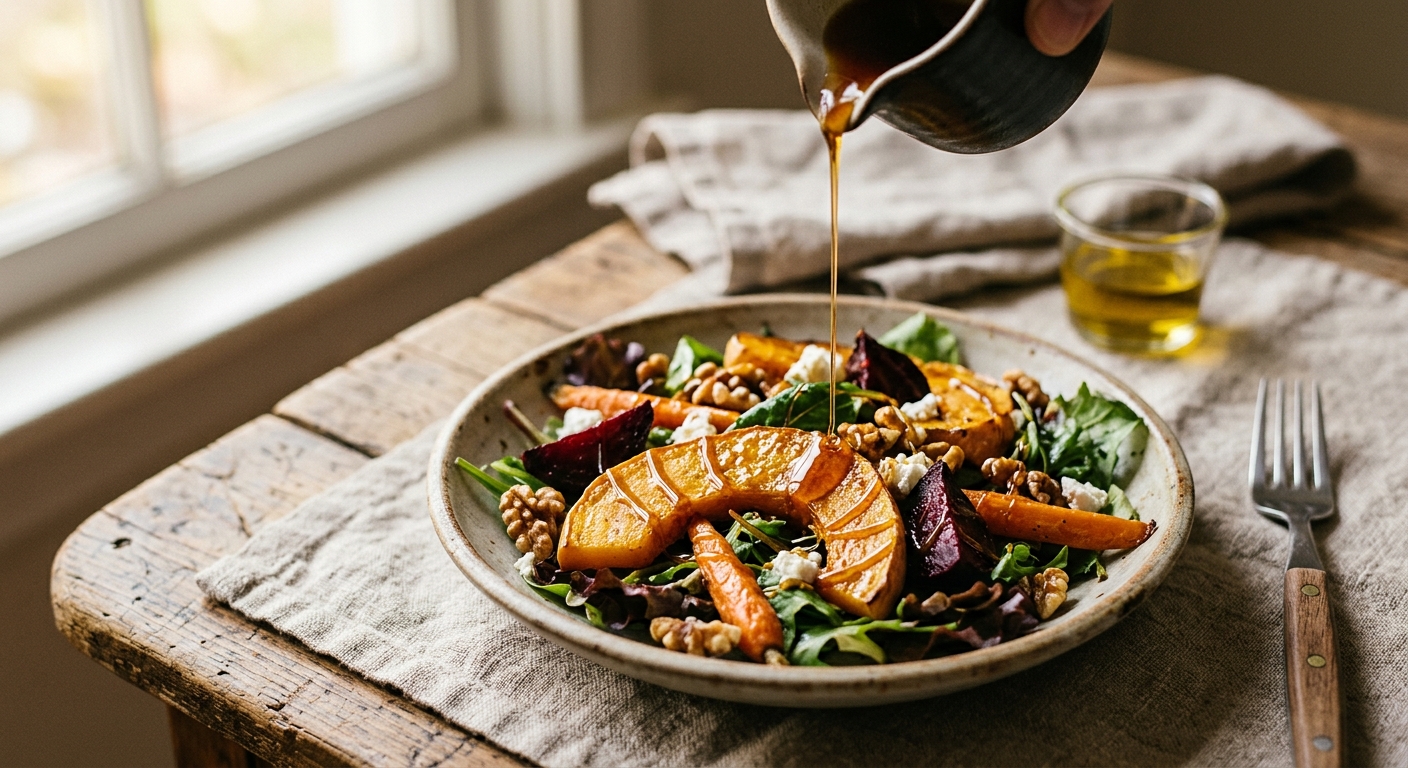
A drizzle is the final flourish that makes a dish look cared for. Olive oil on soup, honey on cheese, balsamic on salad — each adds flavour and gloss. The key is restraint: a drizzle is not a pour. Too much and you drown the dish; just enough and you elevate it.

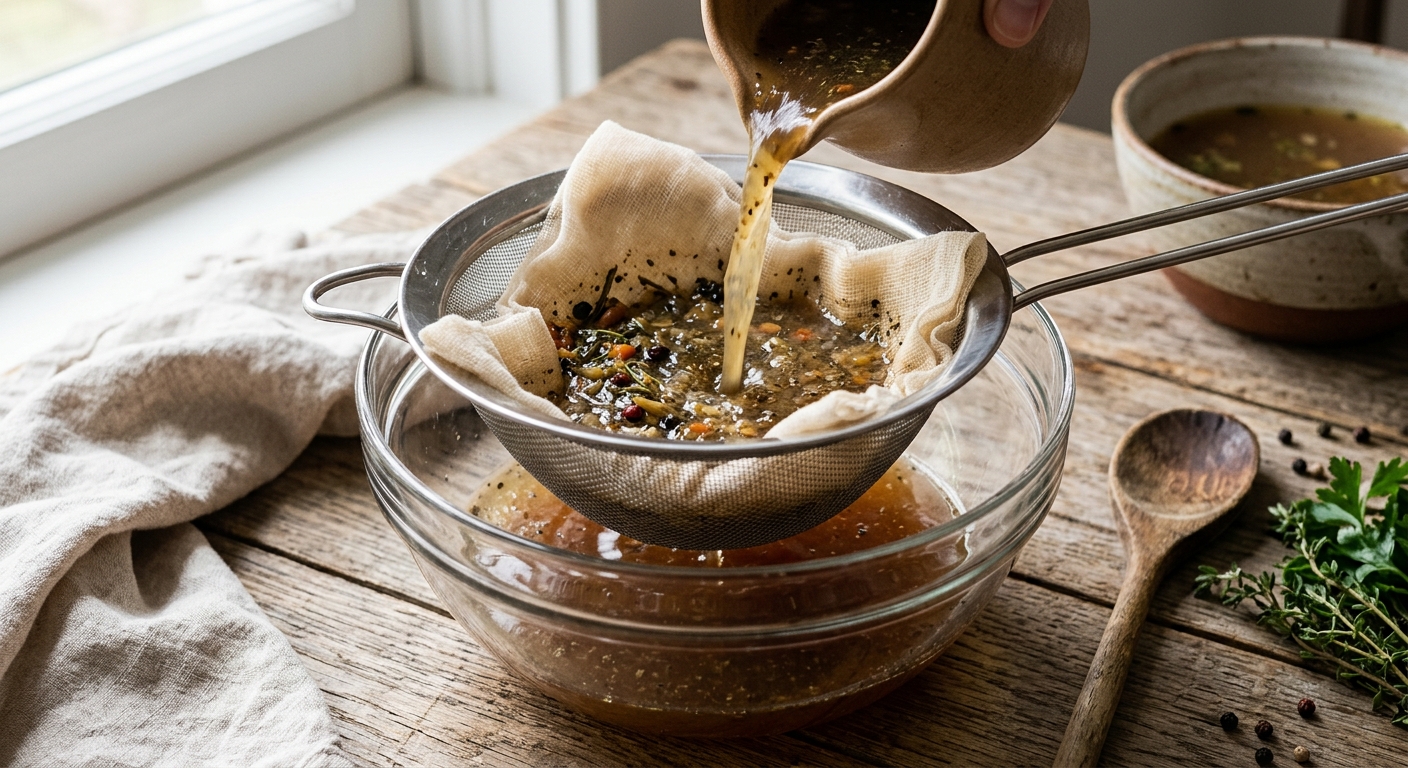
Filtering is what separates a clear stock from a cloudy one, a smooth sauce from a lumpy one, clear coffee from grounds-in-the-cup coffee. A fine sieve does most jobs. Muslin cloth or a coffee filter does the rest when you need something truly clear. The patience required to let liquid drip through slowly rather than pushing it through is rewarded with a noticeably cleaner result.

More theatrical than necessary, but impressive to watch and genuinely useful in small amounts. The flames burn off the harsh alcohol taste while the fruit, sugar, or cream in the pan absorbs the flavour. Crêpes Suzette, cherries jubilee, and steak Diane — all involve flambéing at the table, which was very glamorous in 1975 and has made a quiet comeback. At home, tilt the pan away from you, use a long match, and do not attempt it near anything flammable.

The technique that separates a light soufflé from a flat one and a mousse from a dense pudding. Use a large metal spoon or spatula, cut down through the centre of the mixture, sweep along the bottom and turn it up and over. Rotate the bowl a little and repeat. The goal is to distribute without deflating. Stirring or beating at this stage destroys the air you spent time incorporating. Fold until just combined — streaks are fine.
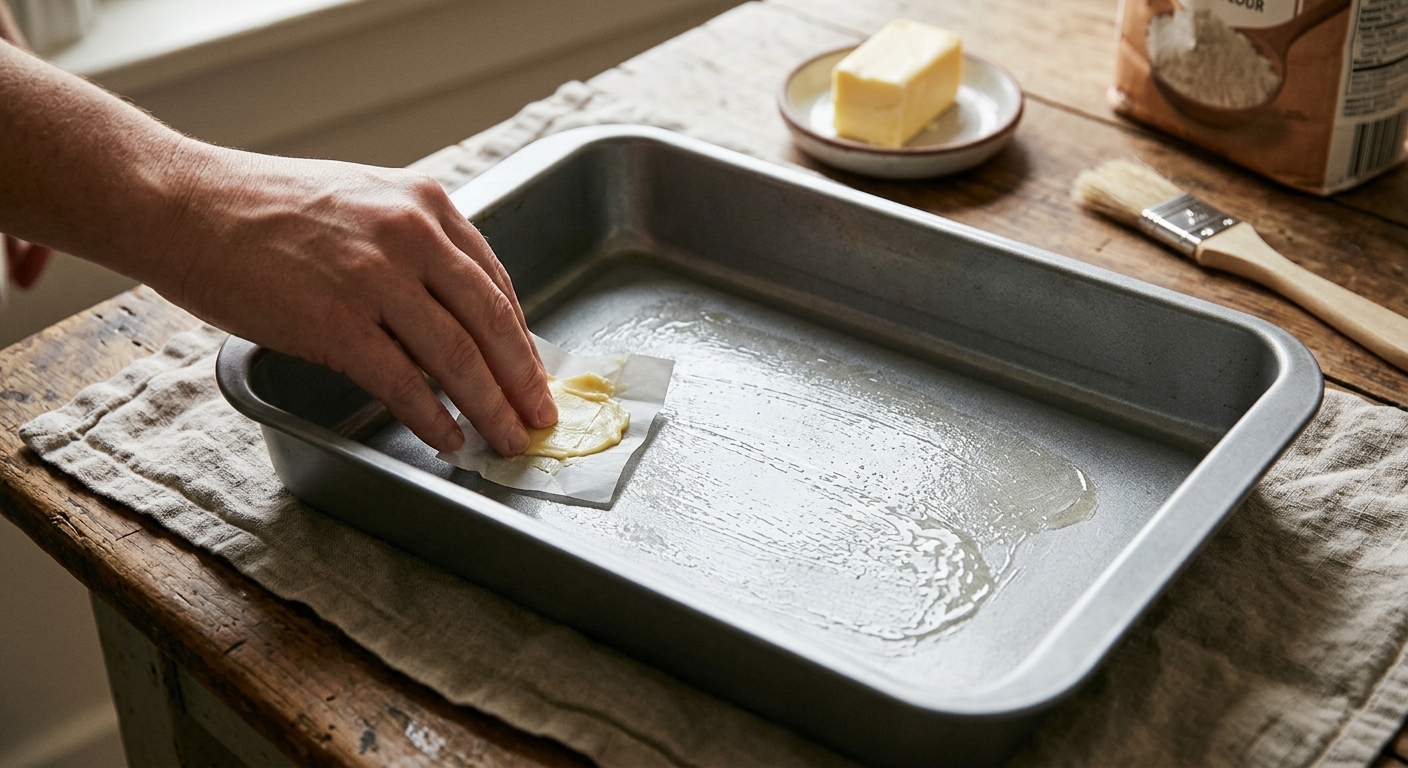
The step most people skip, and then spend ten minutes cursing when the cake comes out in pieces. Greasing creates a barrier between the food and the metal so the food releases cleanly. Butter and a dusting of flour work for cakes. Oil works for bread tins and roasting trays. Baking paper on top of a greased tin works for anything delicate. Greasing takes thirty seconds.

Two different cooking methods share this name, depending on where you are. In the UK, a grill usually refers to the element at the top of the oven that produces direct downward heat — used for toasting, melting cheese, and browning the top of a gratin. In Australia, the US, and most of the world, grilling means cooking over heat from below — on a barbecue or cast-iron griddle. Both produce char, colour and a distinct flavour that no other method replicates.
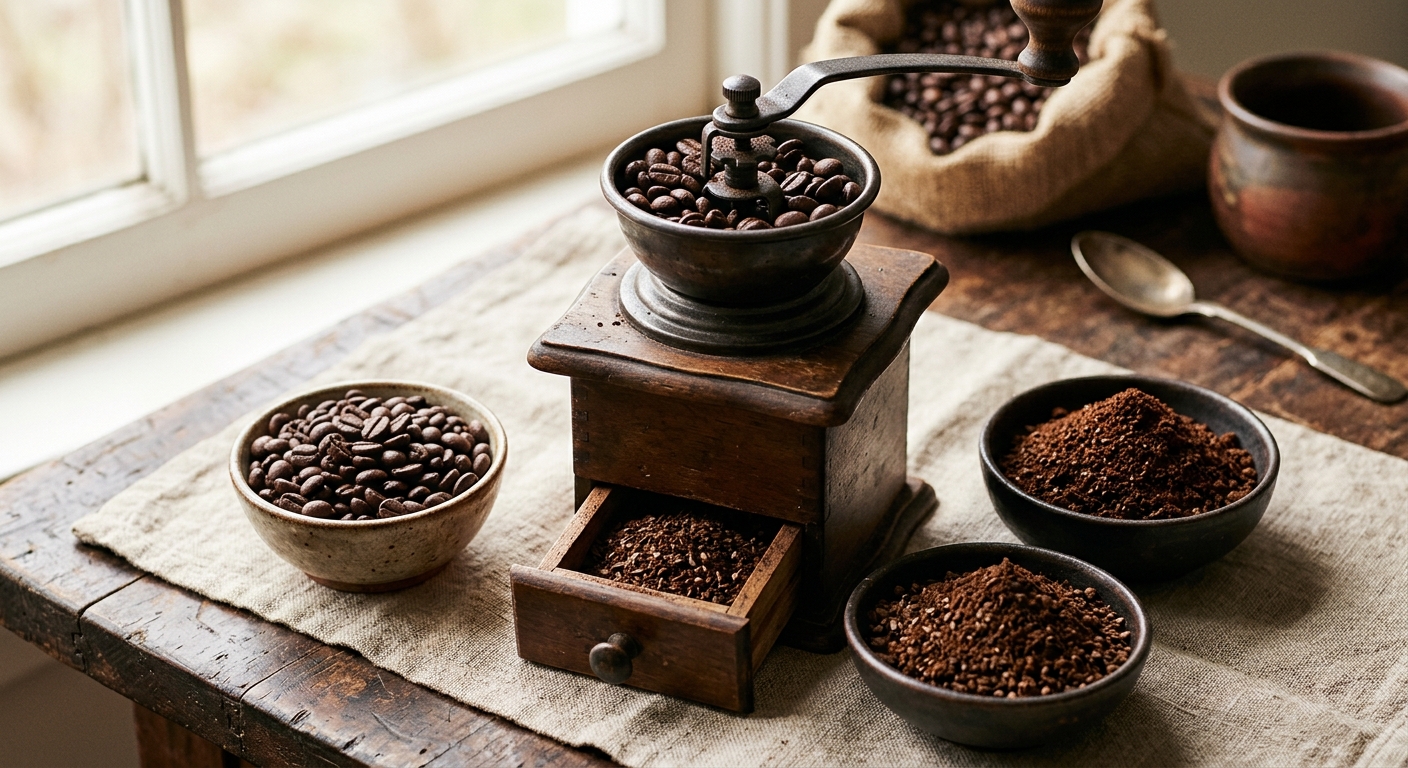
Freshly ground spices are measurably more flavourful than pre-ground ones because the volatile oils that carry the flavour start to dissipate the moment the spice is broken open. A pepper grinder at the table produces better pepper than pre-ground in a jar. Whole cumin and coriander seeds, ground in a small spice grinder before adding to a curry, produce a completely different result from the powder that has been sitting in the cupboard for two years. The difference is worth the extra thirty seconds.

Kneading aligns and strengthens the gluten network in dough, transforming a shaggy, rough mixture into something smooth, elastic, and alive. Push the dough away from you with the heel of your hand, fold it back, give it a quarter turn, and repeat. Ten minutes by hand produces a dough that stretches without tearing and springs back when pressed. Undermixed dough produces dense bread. Well-kneaded dough produces bread with structure and chew.
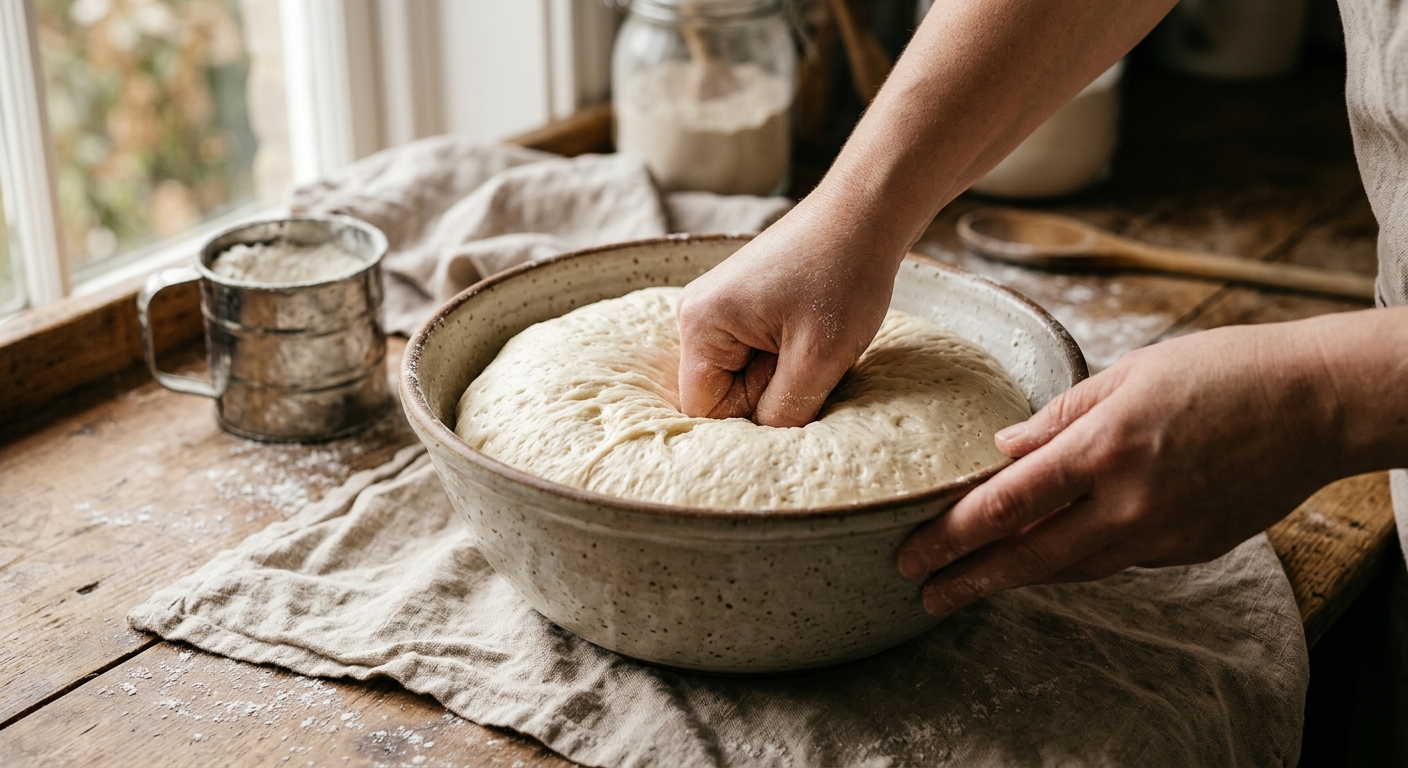
Yeast produces gas bubbles that make dough rise. After the first rise, those bubbles are large and uneven. Knocking back — pressing the dough down firmly with your knuckles — redistributes the yeast, evens out the texture, and gives the bread a better, more consistent final structure. It sounds violent. The dough is fine. It needs this. The second rise after shaping produces the even, well-structured loaf that the first rise alone cannot deliver.
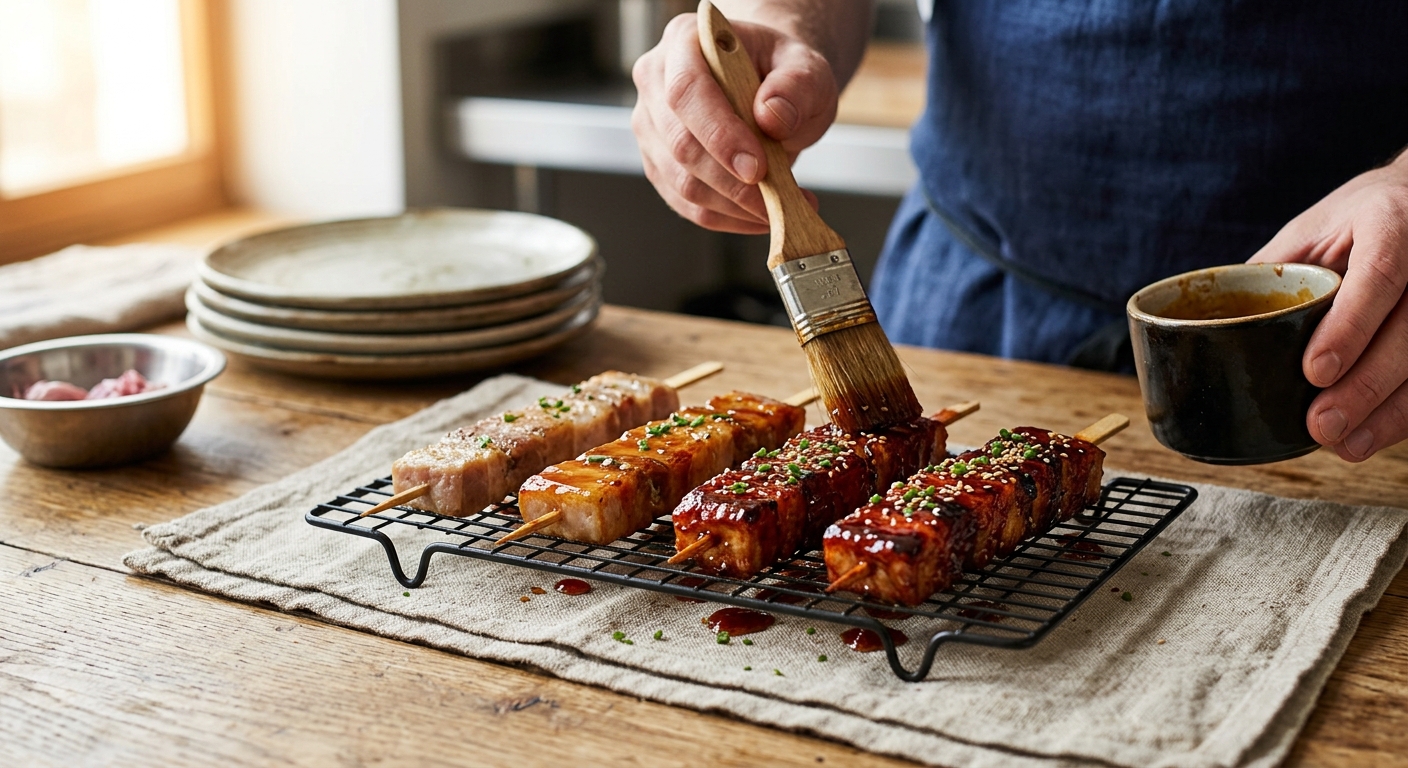
The technique behind Peking duck's famously glossy, mahogany-coloured skin. The duck is brushed repeatedly with a mixture of maltose, soy sauce and spices over many hours as it dries, building up layer after layer of glaze that caramelises during roasting into something deeply savoury, slightly sweet and extraordinarily crisp. The same principle applies to any meat or vegetable glazed repeatedly during cooking. One coat gives colour.

Leavening is what transforms dense, flat dough into something light and airy. Yeast does it biologically, producing carbon dioxide over time. Baking powder and baking soda do it chemically, producing gas immediately on contact with moisture and heat. Steam does it physically in choux pastry and croissants. Beaten egg whites do it mechanically in soufflés and angel cake.

Strawberries macerating in a little sugar and lemon juice for thirty minutes produce more juice, more flavour and a softer texture than fresh strawberries straight from the punnet. Cherries macerating in kirsch become something more complex and interesting. The process is gentle — no heat, just time — and the result is fruit that tastes more intensely of itself while taking on the flavour of the macerating liquid.
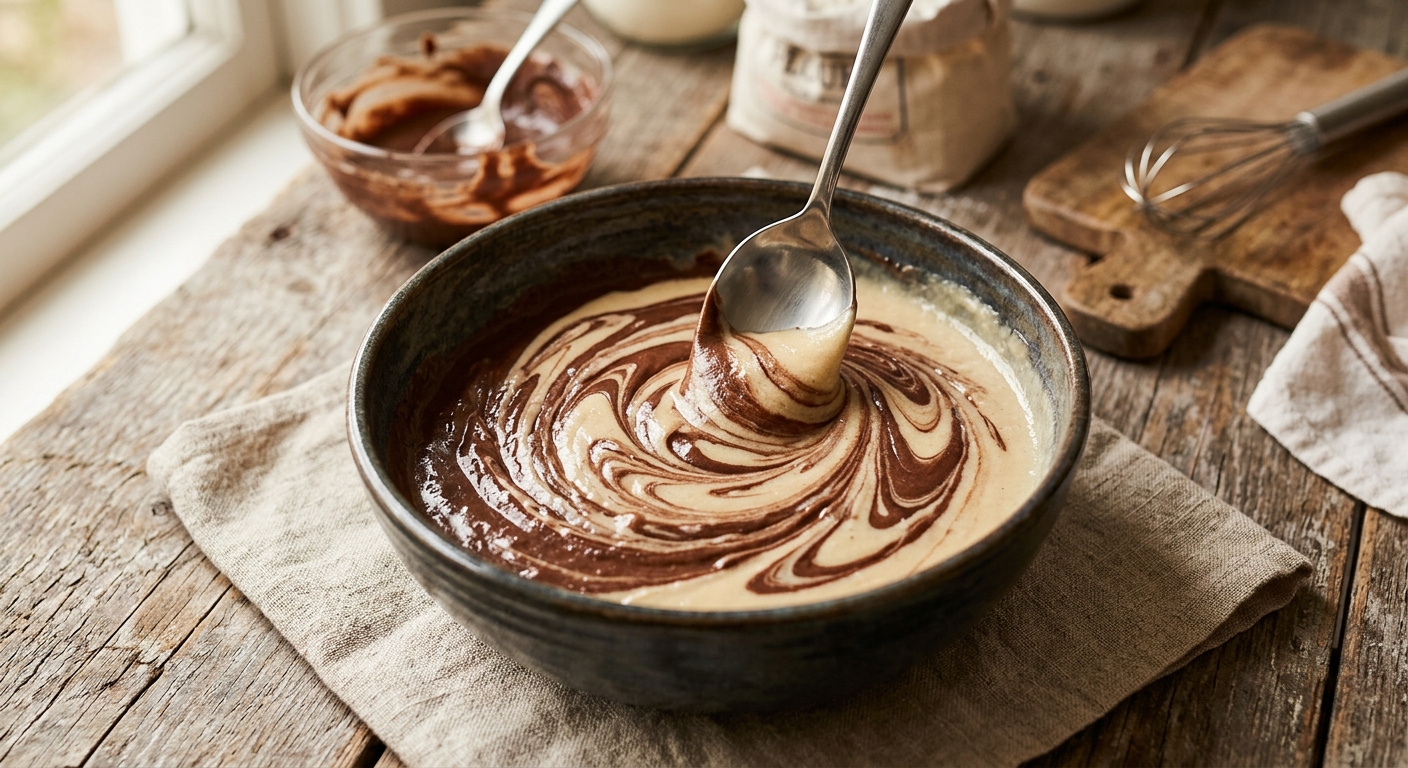
Used most often in marble cake — chocolate and vanilla batters swirled together in the tin before baking, giving the finished cake a striking pattern when sliced. The key is restraint — too much swirling produces a uniform mixture, too little leaves distinct blobs rather than elegant streaks. A skewer or knife drawn through the batter a few times in a figure-of-eight motion is usually enough.
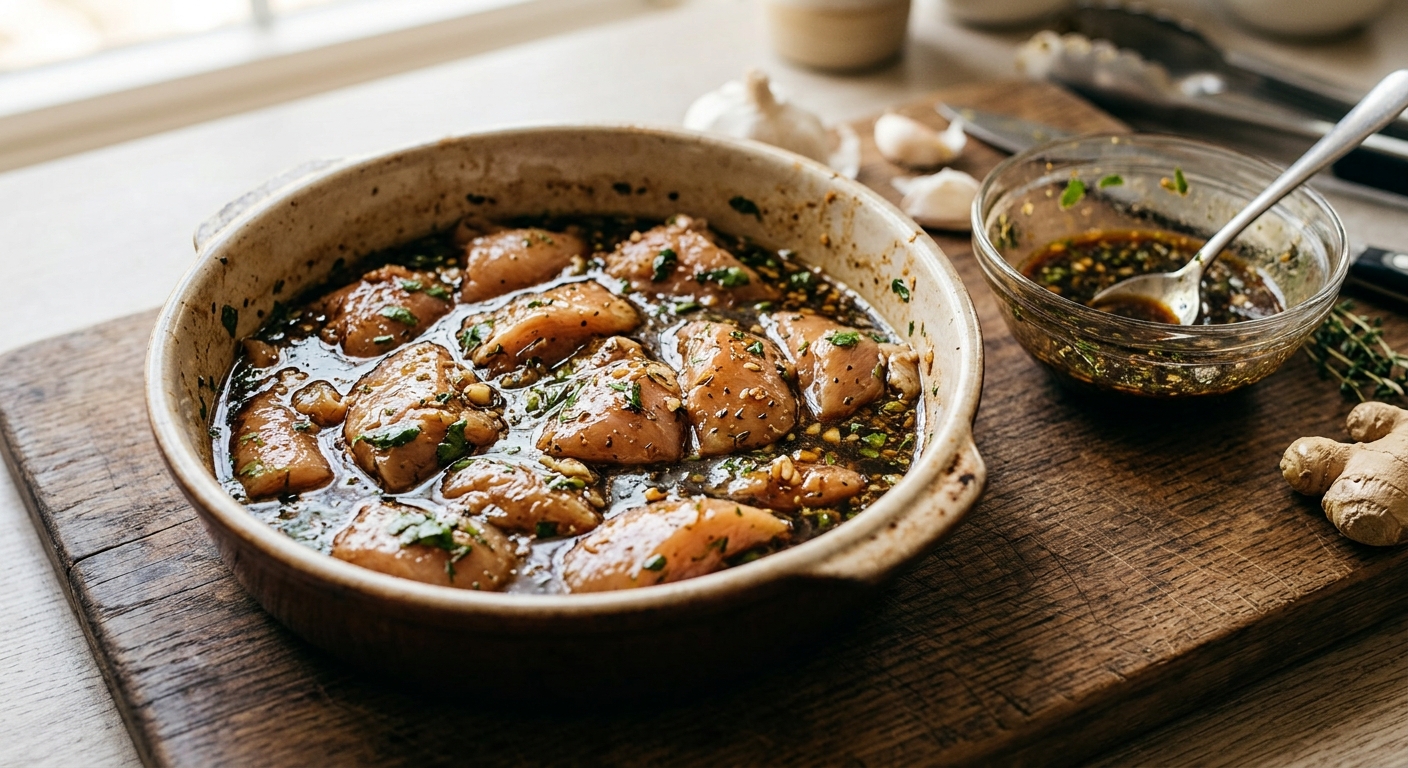
Marinate is the verb. Marinade is the noun. You marinate food in a marinade. This distinction is worth knowing because recipes use both, and they mean different things. The process itself is simple — combine food and marinade in a sealed container or bag, refrigerate, and leave for the specified time. Turn the food occasionally if you remember.
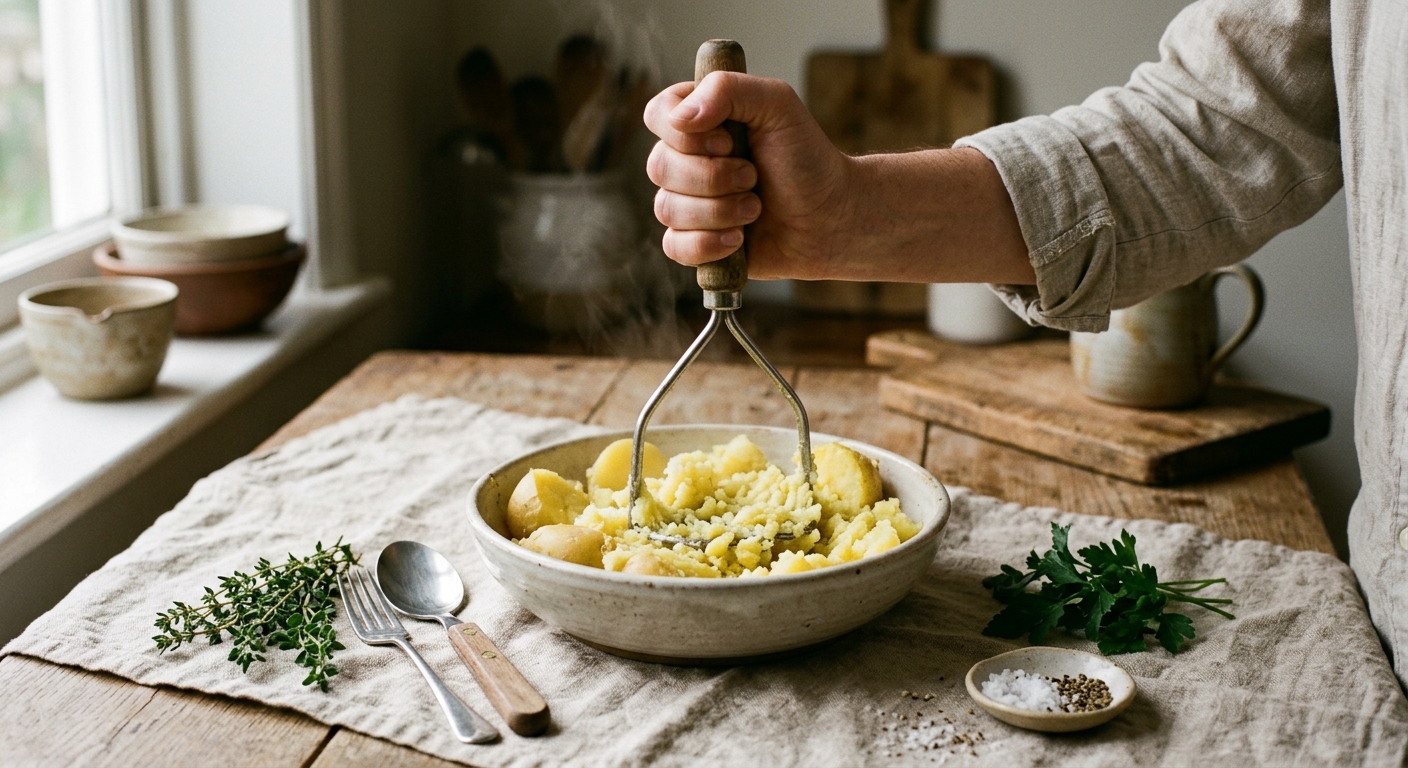
Mashed potatoes sound simple and are simple to do badly. Good mash requires floury potatoes cooked until completely tender, drained very thoroughly, and mashed while still hot with warm butter and hot milk or cream. Cold butter and cold milk produce a gluey result. A potato ricer produces the smoothest mash. A masher produces a more textured result. A blender or food processor can be used to make wallpaper paste. Never use a blender for mashed potatoes.

Minced garlic distributes more evenly through a dish than sliced garlic and releases more flavour. Minced herbs go further than roughly chopped ones. Minced meat — beef, pork, lamb — is ground fine enough to hold together when formed into burgers or meatballs, yet still identifiable as meat rather than paste. A sharp knife and a rocking motion produce minced herbs and aromatics. A mincer or food processor does meat.


The everyday technique for fish fillets, chicken breasts, pork chops, and anything that needs a browned exterior and a cooked-through interior without being submerged in oil. The fat should be hot before the food goes in — cold fat means the food steams rather than fries and sticks to the pan. Do not overcrowd the pan, or the temperature drops and everything stews.

To partially cook food in boiling water before finishing it by another method — most commonly done with potatoes before roasting. In plain English: The secret to a proper roast potato. Potatoes parboiled until their edges are starting to soften, then drained and shaken in the pan until the surfaces are roughed up and fluffy, then put into very hot fat — they roast into something with a crisp, craggy exterior and a completely soft interior. Without parboiling first, roast potatoes have a harder time developing that contrast. The same principle applies to parboiling vegetables before grilling or finishing in a pan — it cuts the final cooking time and ensures even cooking.

Paring is peeling done with a small paring knife rather than a vegetable peeler, usually for more delicate work — turning artichoke hearts, removing the skin from citrus segments or shaping vegetables precisely. The paring knife is the small, shortbladed knife in any knife set — the one that looks like it should not be important but is indispensable for anything that requires close, controlled work.
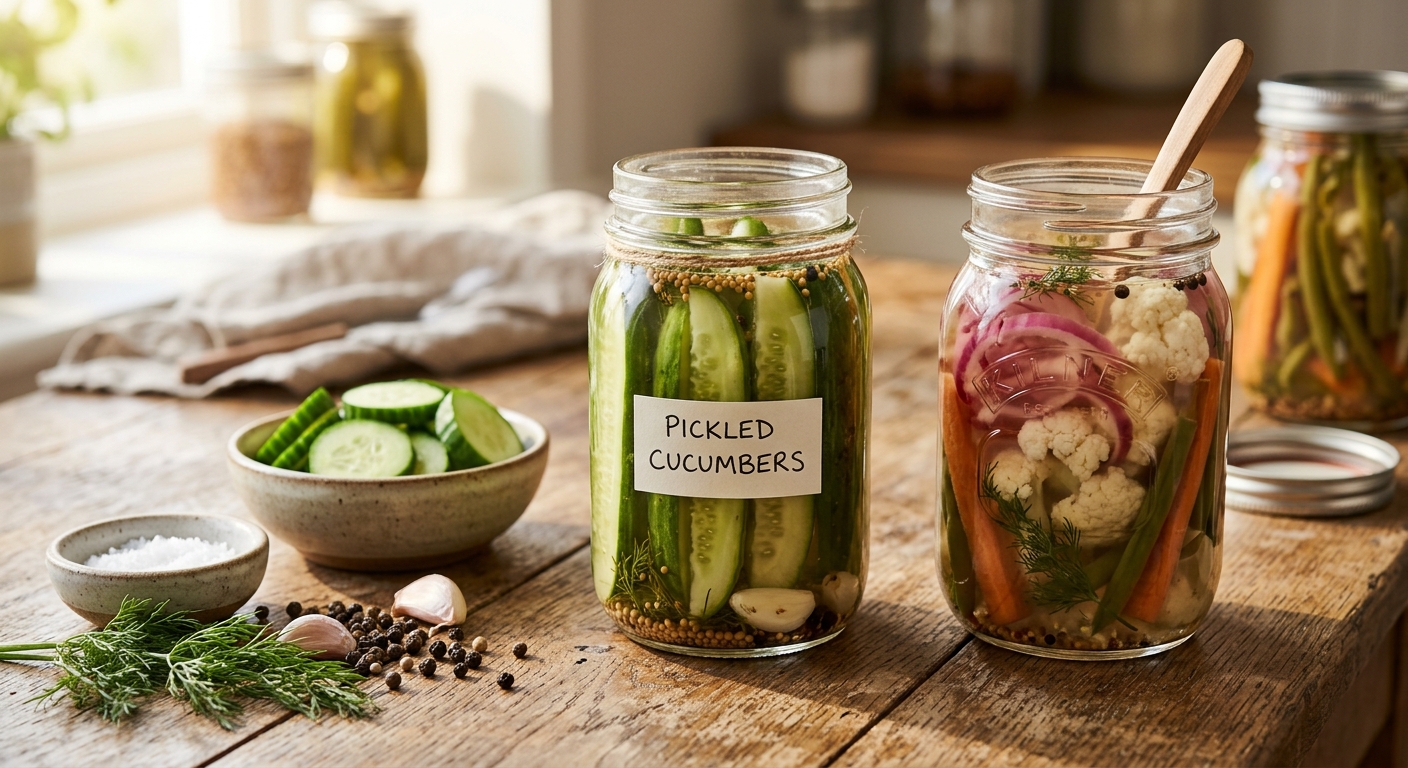
Pickling preserves food and transforms it. Cucumbers pickled in vinegar and dill become something sharp, crunchy, and entirely different from a fresh cucumber. Quick-pickled red onions in vinegar soften and turn pink within an hour, and add brightness to anything rich or fatty. The acid in the pickling liquid inhibits bacterial growth and changes the flavour and texture of whatever goes into it.
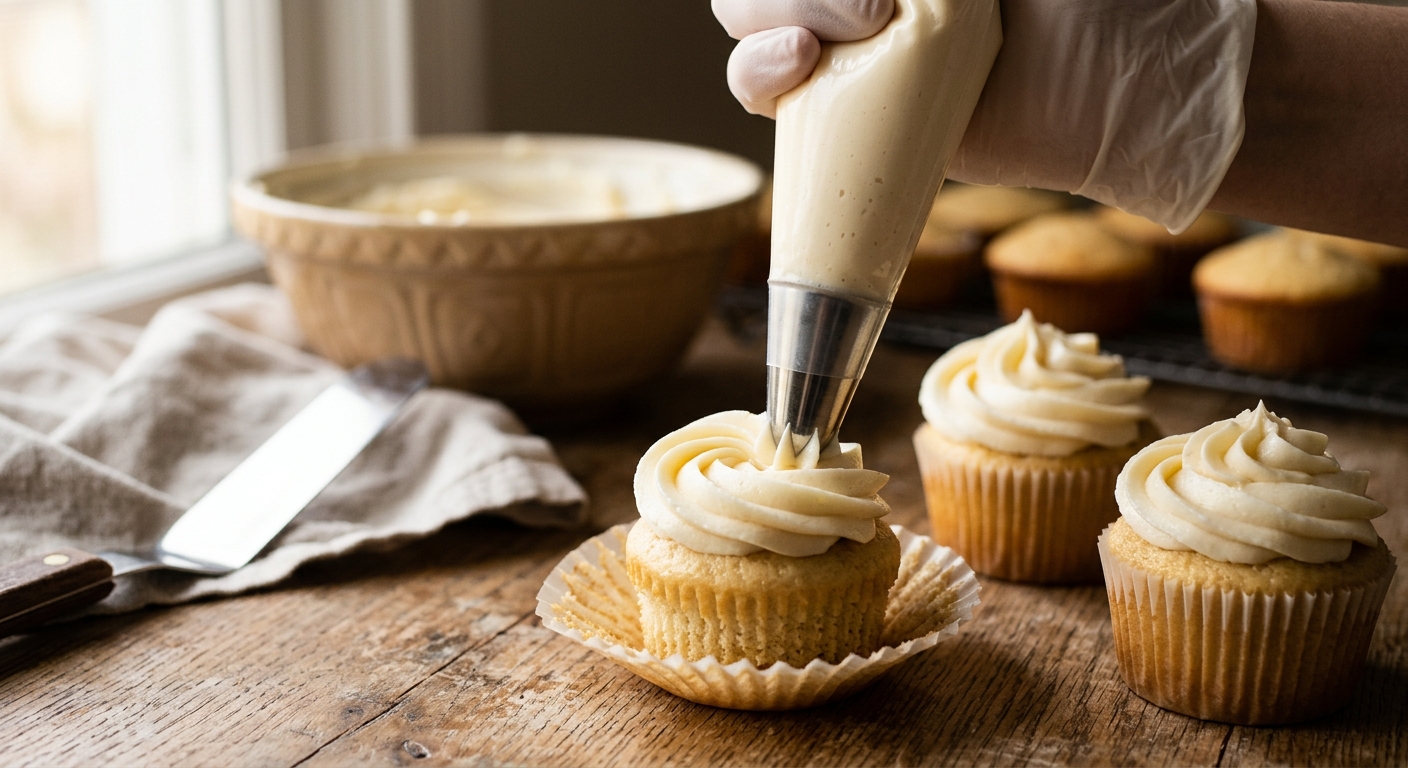
The technique that produces the neat swirls on cupcakes, the elegant rosettes on a charlotte, the long strips of choux pastry that become éclairs, and the tidy mounds of meringue on a baked Alaska. The nozzle determines the shape — a star nozzle produces ridged rosettes, a plain round nozzle produces smooth blobs or lines. Fill the bag only halfway. Twist the top closed and hold the twist, not the bag itself.
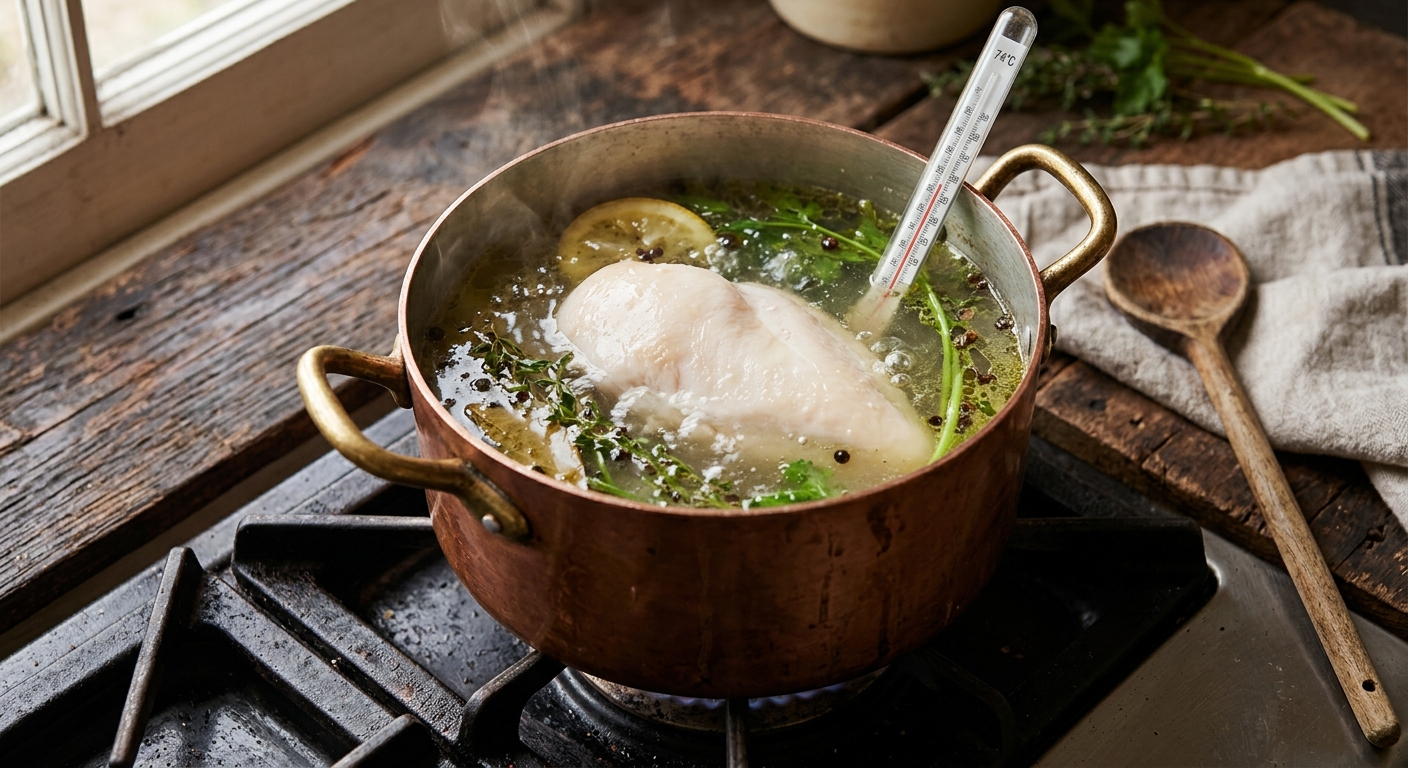
The gentlest wet cooking method and the one that requires the most attention to temperature. The liquid should be moving very slightly — just the occasional lazy bubble breaking the surface — not rolling or boiling. Eggs poached properly produce set whites and runny yolks in about three minutes. Chicken poached in stock stays remarkably moist. Pears poached in red wine and spices become something elegant and worth serving to people you want to impress. The moment the liquid boils properly, the food toughens.

The oldest form of food technology and still one of the most useful. Sugar preserves fruit into jams and jellies. Salt preserves meat into bacon and fish into gravlax. Acid preserves vegetables in pickles. Smoking preserves and flavours meat and fish simultaneously. Drying removes the moisture that bacteria need to survive. Each method not only extends shelf life but changes the food — sometimes subtly, sometimes dramatically. Preserved foods are not compromises.
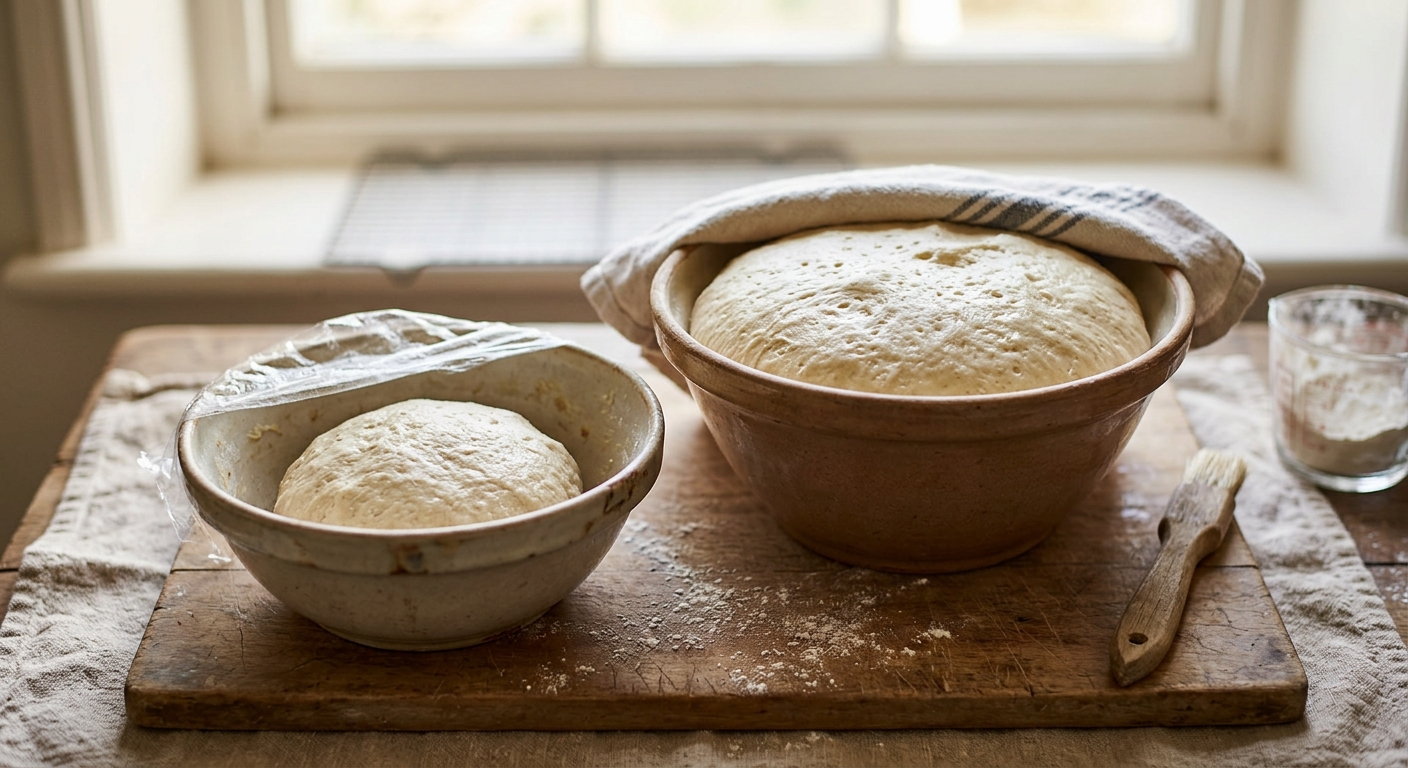
Proofing is where the flavour of bread develops. Yeast consumes sugars in the flour and produces carbon dioxide — this inflates the dough — and alcohol and other compounds that create flavour. A long, slow proof in a cool place produces more flavour than a fast proof in a warm one. Most bread has two proofs — the bulk fermentation after mixing, and the final proof after shaping. Skipping either one produces flat, flavourless bread.
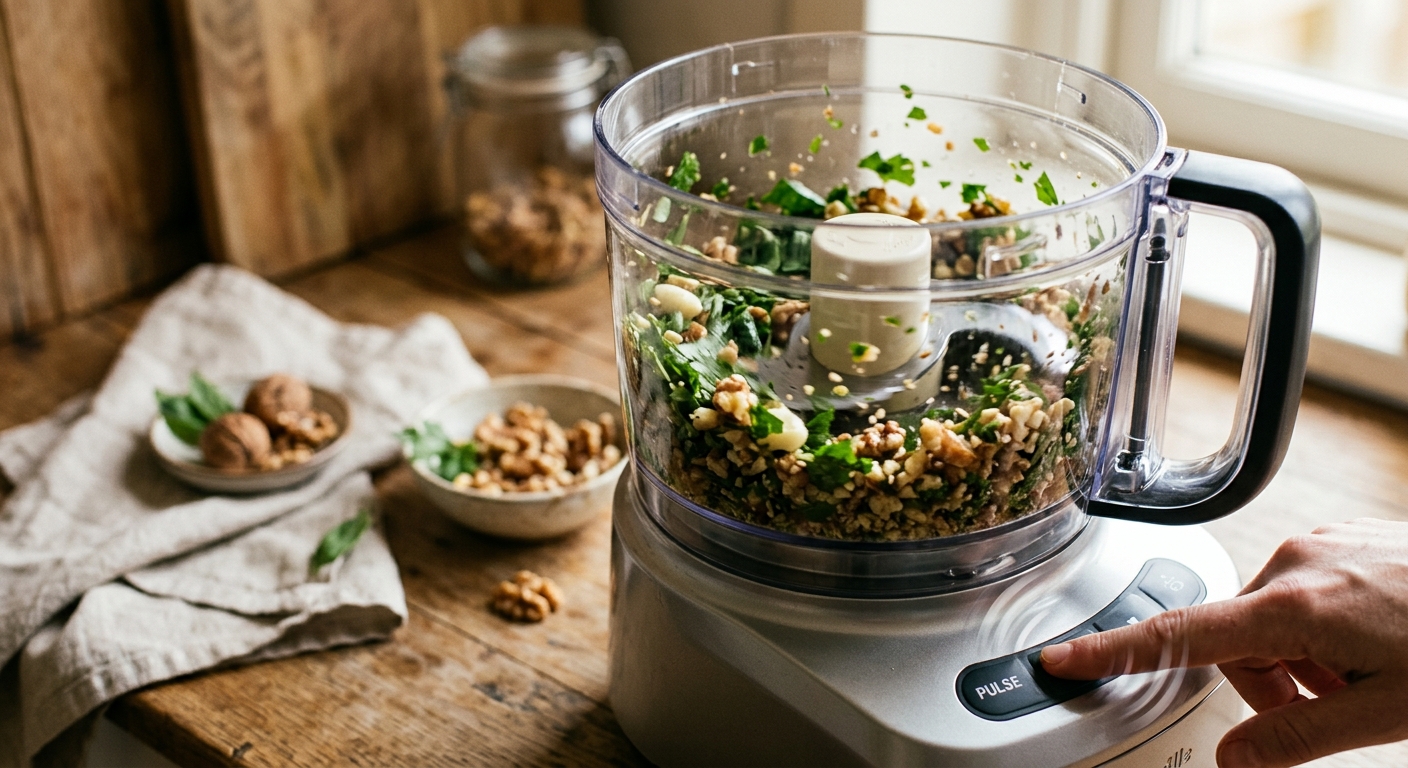
The difference between a rough, textured salsa and a smooth purée in a food processor is often just a few extra seconds of running. Pulsing — short bursts of one to two seconds with the machine off in between — keeps you in control. You can see what is happening, stop when the texture is right, and avoid the overprocessed result you cannot undo.

The technique that turns a thin, watery liquid into an intense, coating sauce. Water evaporates as the liquid simmers, leaving behind everything else — the flavour compounds, the gelatin, the solids — in increasingly concentrated form. Reduce by half and the flavour roughly doubles. Reduce by three-quarters, and it is intensely concentrated. The process requires no skill beyond patience and attention — just keep it at a steady simmer and check regularly.

French for reduce until dry, and that is exactly what it means. The liquid — usually wine or vinegar with shallots — is cooked until almost nothing remains, leaving a concentrated, intensely flavoured paste or near-dry residue. This is the first step in making béarnaise and many other classical sauces. The few drops or spoonful that remain have a concentrated flavour that the same liquid before reduction simply does not.
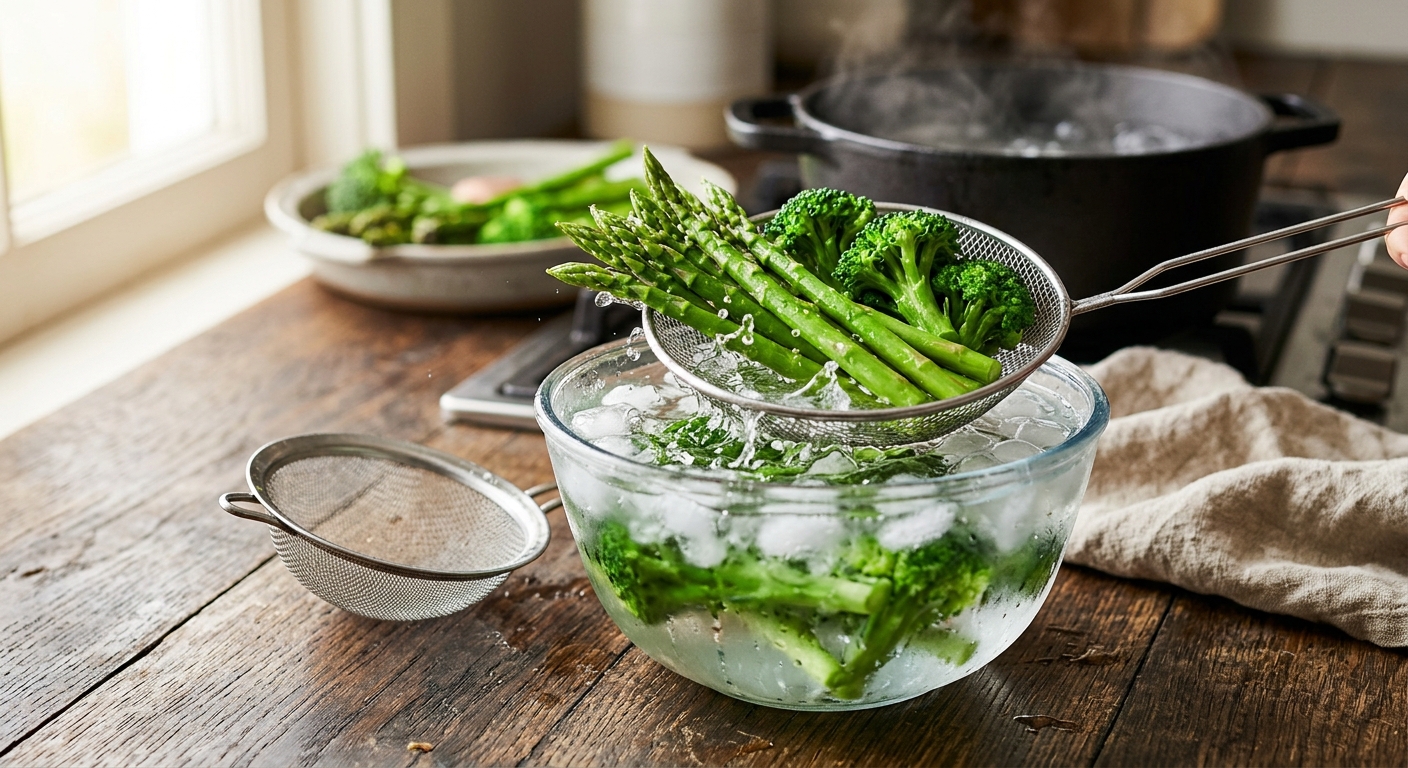
The step after blanching that makes the difference between vibrant green beans and grey ones. The ice bath stops the heat instantly — without it, residual heat continues to cook the vegetables even out of the pan. Refreshed vegetables hold their colour, their crunch, and their fresh flavour until you are ready to use them. This is how restaurants serve vegetables that are bright green and just tender, hours after prep is done. It is not a fussy extra step.

The instruction that appears in every recipe involving raw meat, dairy, or anything perishable, and the one most people understand instinctively. What is less instinctive is refrigerating things to slow or stop a process — chilling pastry dough to rest the gluten, refrigerating a set gelatine dessert to firm completely, chilling a cream mixture before whipping. In these cases, refrigerating is a step in the cooking process rather than just for food safety. The recipe tells you when and for how long.

Duck legs placed skin-side down in a cold pan, brought up to a moderate heat, and left alone while the fat melts out gradually — this is rendering. The fat that was solid and thick becomes liquid, the pale skin becomes golden and crisp, and what remains is concentrated flavour rather than excess grease. Pork crackling, crispy bacon, golden duck skin — all the result of rendering done properly. Too much heat and the outside burns before the fat renders.
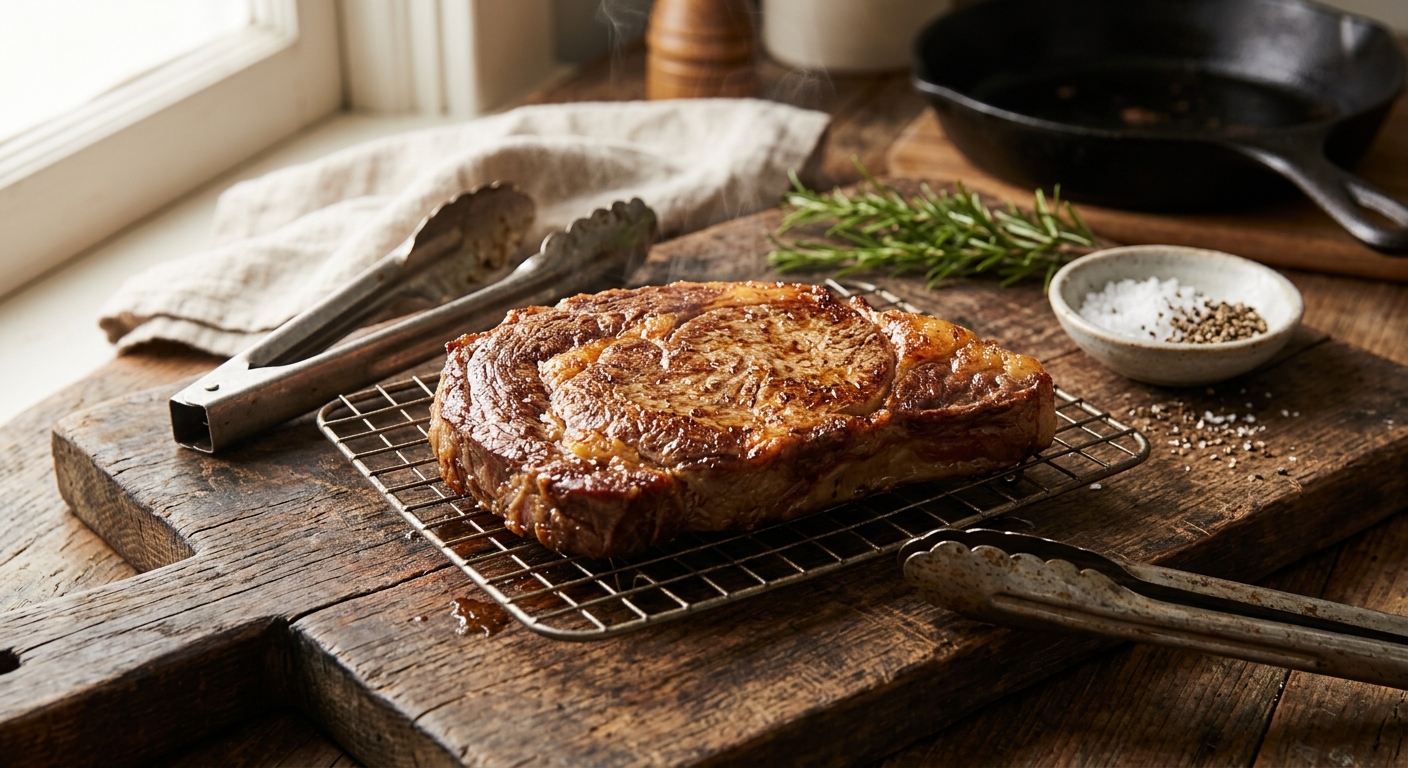
The step most people skip when they are hungry and the step that makes the biggest difference to a roast. During cooking, heat drives juices toward the centre of the meat. Resting allows those juices to redistribute evenly — when you cut into a rested roast, the juices stay in the meat. Cut immediately, and they pool on the board. A large roast needs twenty to thirty minutes. A steak needs five.

The technique that turns a chicken into a proper roast chicken. High dry heat surrounds the food from all sides, browning the outside through the Maillard reaction while the inside cooks through more gently. Vegetables roasted in hot fat develop caramelised edges and concentrated sweetness. Meat roasted at the right temperature develops a golden exterior and a juicy interior. The oven temperature and the size of what you are cooking determine the timing. A probe thermometer determines when it is done.

The word comes from the French sauter — to jump — which describes what the food does in the pan. High heat, a little fat, and constant movement. The goal is colour on the outside and tenderness inside without stewing in liquid. It is faster than roasting and more controlled than frying. When a recipe says sauté the onions, it means cook them briskly in butter or oil until softened and lightly golden — not raw, not burnt, not slowly caramelised.

Most often done with milk. Scalding kills surface bacteria, dissolves sugar more easily, and, in bread-making, deactivates proteins that would otherwise weaken gluten. In older recipes, it appears constantly because milk was not pasteurised. In modern cooking, it still matters for custards and some doughs where temperature affects the final texture.

Scoring serves several purposes depending on what you are cutting. On fish skin, it prevents curling in the pan. On bread, it controls where the loaf splits as it rises. Using pork or duck fat helps render the fat and crisp the skin. On mango, it makes the flesh easy to push through and serve. The cuts are shallow and deliberate, not deep.

This is a handling word. It tells you what to do to the food so the final result comes out better. What you are likely to get: a change in texture, colour, flavour, moisture, or finish, even when the ingredients themselves stay the same. Scraping down ensures everything is incorporated evenly. Do it at least once mid-mix and again at the end. Uneven mixing shows in the finished bake. You are likely to meet this term in recipes, menus, cooking shows, or food writing that assumes the reader already knows more than they do.

Seasoning is not a finishing touch — it happens throughout the cooking process. Salt added at the beginning draws out moisture and builds flavour from the inside. Salt added only at the end sits on the surface. Tasting as you go is the only reliable method. A dish that tastes flat usually needs salt rather than more of anything else.

The most honest instruction in any recipe, and the one most often skipped. No recipe can account for the saltiness of your butter, the strength of your stock, or how salty you like things. Tasting and adjusting at the end is what separates food that is merely cooked from food that is ready to eat. Add a little, taste, add a little more. Salt is usually what is missing. This is one of those instructions people skip right before blaming the recipe.
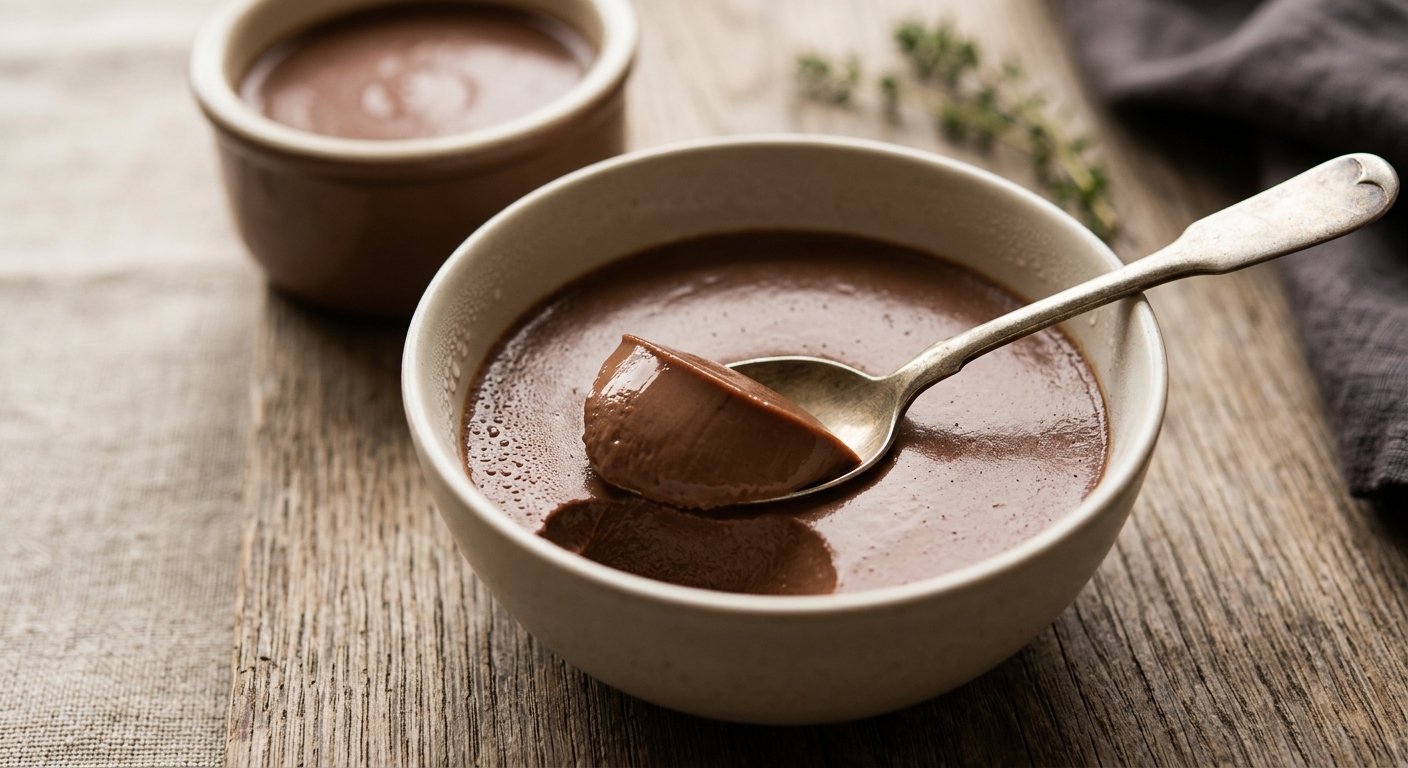
Jellies set as gelatin cools. Custards set as eggs firm in the heat. Chocolate sets as it drops below its melting point. Cheesecakes set overnight in the refrigerator. The word tells you that time, rather than more heat, is what the recipe needs next. Cutting or serving before something has properly set usually ends badly. This sort of word appears when someone wants to describe not just the food itself, but the way it is cooked, served, or dressed up. Shallow-fry sounds SHAL-oh-fry To fry food in a small amount of oil so only part is submerged at one time. Halfway between pan-frying and deep-frying. The oil is deeper than a simple pan-fry, but the food is not fully submerged. Schnitzel, fish fillets, croquettes, and fritters are all typically shallow-fried. The oil temperature matters as much as in deep-frying — too cool and the food absorbs oil and becomes greasy, too hot and the outside burns before the inside cooks through.

Slow-cooked meat is shredded by pulling it apart with two forks while still warm. Cabbage is finely shredded for coleslaw. Cheese is shredded on a grater.

For oysters, this means inserting a short, thick-bladed knife into the hinge, twisting to pop it open, then sliding the blade along the inside of the top shell to pry it open. It takes practice and a proper shucking knife — a regular knife is both ineffective and dangerous. A folded tea towel protects the hand holding the oyster.
Flour and icing sugar compact in storage and develop lumps that do not mix out easily. Sifting breaks them up and lightens the texture before they go into a batter or dough. For cakes where a fine, even crumb matters, it makes a difference. For bread or pizza dough, it rarely does.
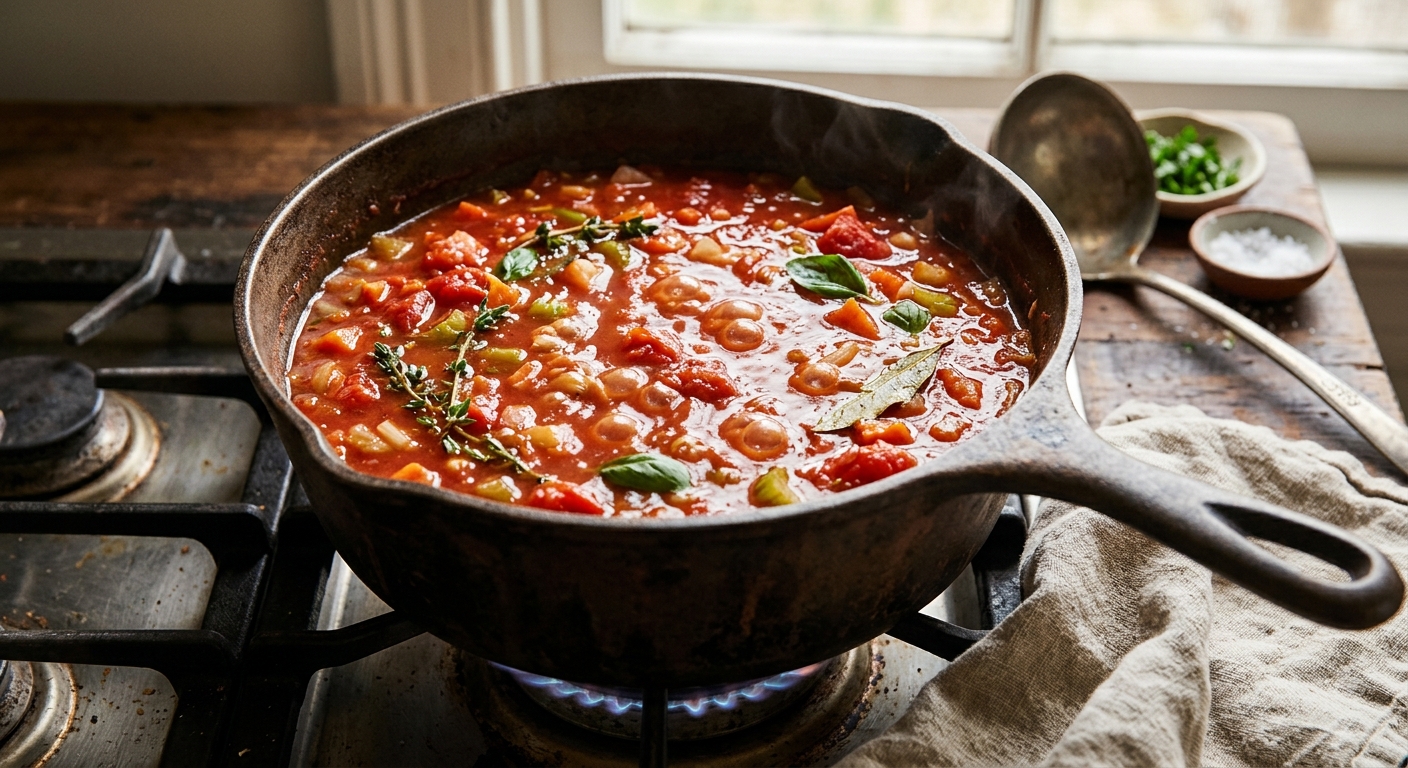
The most useful cooking temperature in the kitchen, and the one most often run too hot. A simmer is not a boil. Stocks simmered gently; stay clear. Stocks boiled hard; turn cloudy and harsh. Braises, soups, and sauces develop better flavour at a simmer than at a boil because the gentler heat extracts without agitating. If the liquid is moving vigorously, turn it down.

It tells you what to do to the food so the final result comes out better, not just what to call the dish. Two distinct uses. On the grill, skewers hold pieces of meat, seafood, or vegetables together so they can be turned easily over the heat without falling through the grates. For baking, a skewer inserted into the centre of a cake and withdrawn clean means the cake is done. Wooden skewers should be soaked in water for thirty minutes before grilling, or they will scorch.

Stocks and braises release foam and fat as they cook. Skimming removes both. Fat skimmed from a stock produces a cleaner, lighter result. Foam skimmed early in cooking removes proteins that would otherwise cloud the liquid. A wide, flat spoon or ladle makes skimming easier.

The thickness of the slice affects how the food cooks and how it tastes. Thin slices cook faster, crisp more easily, and work better in salads and sandwiches. Thicker slices hold up to heat and stay juicier in the centre. A sharp knife and a steady hand produce more even slices than a blunt one.

Cold smoking flavours without cooking — smoked salmon is the clearest example. Hot smoking cooks and flavours at the same time — smoked brisket, smoked chicken. The wood used changes the flavour. Applewood is mild and slightly sweet. Hickory is stronger and more assertive. Mesquite is the most intense. Home smoking is possible with a kettle barbecue and a handful of soaked wood chips. The process is slow by definition.

A spatchcocked chicken cooks in roughly half the time of a whole roast bird and browns more evenly because the surface is flat against the heat. Use strong kitchen scissors to cut along both sides of the backbone, then remove it. Then press the bird flat with your hands. The legs and breast finish at the same time, which solves one of the most common problems with roasting a whole chicken. Ask a butcher to do it if the scissors feel daunting.

Spiking is about addition with intent. A punch spiked with rum. A gravy spiked with Worcestershire sauce. A chocolate mousse spiked with espresso. The added ingredient does not dominate but shifts the flavour in a deliberate direction — sharper, deeper, warmer, or more complex. The amount is usually small. The effect is usually noticeable.

One of the gentlest cooking methods available, and one of the most underused in home kitchens. Vegetables steamed briefly retain colour, texture, and nutrients better than boiled ones. Fish steamed over aromatics — ginger, lemongrass, wine — absorbs flavour while staying moist. A bamboo steamer over a wok, a metal steamer basket in a saucepan, or a tight-lidded pan with a splash of water all work. The food should sit above the water, not in it.
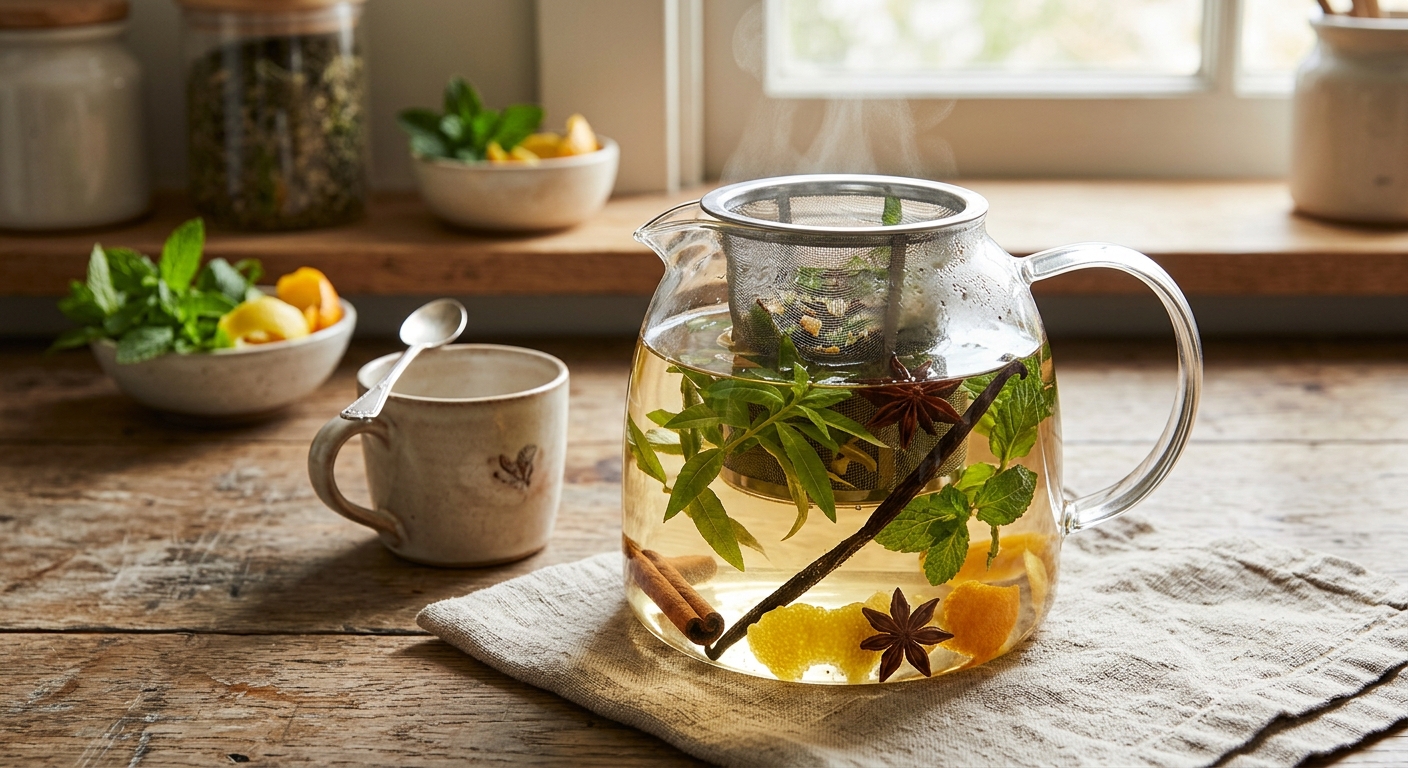
Tea is the most familiar example of steeping — the leaves sit in hot water until the water tastes of tea, then the leaves are removed. The same principle applies throughout cooking. Warm cream steeped with vanilla becomes the base of a proper custard. Steeping milk with bay leaves and peppercorns before making béchamel yields something considerably more interesting than plain milk. The steeping liquid does the work.

Essential for jams, pickles, chutneys, and anything intended to be stored at room temperature for more than a few days. The most reliable method is to wash jars in hot soapy water, rinse them well, and place them in an oven at 120 degrees for fifteen minutes. Fill while still hot. A jar that has not been properly sterilised will allow bacteria to develop, and the contents will spoil regardless of how well the preserve itself was made.
The long cooking time is not a disadvantage — it is the whole point. Cheaper, tougher cuts of meat that would be unpleasant cooked quickly become tender and deeply flavoured after two or three hours in liquid. The liquid itself becomes a sauce as collagen breaks down and the meat releases its flavour into the pot. A stew made the day before and reheated is almost always better than one served immediately.

Simple in principle, important in practice. Stirring a risotto continuously releases starch and builds the characteristic creamy texture. Stirring a custard constantly prevents the eggs from scrambling on the base of the pan. Not stirring a caramel allows the sugar to brown evenly.

The technique depends entirely on heat. A home stovetop rarely gets as hot as a commercial wok burner, but the principle is the same — everything must be cut to a similar size, the pan must be properly hot before anything goes in, and the food must keep moving. Cook in small batches rather than crowding the pan, which drops the temperature and produces steaming rather than frying. Prepare everything before you start because once the heat is on, there is no time to stop.
Stocks are strained to remove bones and vegetables once they have given up their flavour. Custards are strained to remove any cooked egg that has formed threads. Sauces are strained for smoothness. The fineness of the sieve determines the result — a coarse sieve removes large solids, a fine mesh removes almost everything. For the clearest stocks, line the sieve with muslin or a clean tea towel.

Stuffing a chicken with herbs, lemon, and garlic perfumes the meat from the inside as it roasts. Stuffing mushrooms or capsicum with a seasoned mixture turns them from a side dish into a main. Stuffing pasta produces tortellini and ravioli. The filling should be seasoned well on its own because it will be enclosed and cannot be adjusted after cooking. Overfilling causes splitting. Underfilling leaves the cavity dry.

The opposite of searing. Low heat, a little fat, and patience. Onions sweated slowly, becoming translucent, sweet, and soft without any browning. This is the base of most soups, stews, and sauces because the sweetness released by sweating builds flavour in the finished dish without the stronger, more assertive notes that browning produces. A lid placed on the pan traps moisture and speeds the process.

Two quite different techniques share the name. Tempering eggs means adding a little hot liquid to beaten yolks gradually — warming them slowly before they go into the main liquid — so they do not scramble on contact with heat. Tempering chocolate means melting it, cooling it, and rewarming it to specific temperatures so that the cocoa butter forms stable crystals, producing chocolate that sets with a snap and a gloss rather than a dull, soft finish. Both require patience.

Tough cuts are tough because of connective tissue and dense muscle fibres. Tenderising works on both before the heat does. Pounding with a meat mallet physically breaks down the fibres and produces an even thickness for faster cooking. Acid marinades — lemon juice, buttermilk, vinegar — denature proteins and soften the surface. Enzymes in pineapple, papaya, and kiwi work faster and more aggressively than acid. Long, slow cooking breaks down collagen into gelatin over time. Each method produces a different result and suits different cuts.

Sauces thicken in several ways. Reduction concentrates the liquid by evaporating water. A roux adds flour and fat. A slurry adds starch to cold water. Egg yolks thicken gently when heated. Cream reduces and thickens. Purée adds body. Each method produces a different texture and flavour. Reduction produces intensity. Starch produces a neutral thickness. Egg yolks produce richness.

Toasting does two things: it removes moisture, and it develops flavour. Toasted bread has a crust and a nutty depth that untoasted bread does not. Toasted nuts have an intensity and crunch that raw nuts lack. Toasted spices release their oils and become dramatically more fragrant. Sesame seeds toasted in a dry pan before adding to a dish taste completely different from untoasted ones. The step takes thirty seconds and changes the flavour more than almost any other single action. Toast the nuts. Toast the spices.

When a recipe says trickle in the oil, it means add it so slowly that the flow is almost imperceptible — particularly important when making mayonnaise or hollandaise, where adding oil too fast breaks the emulsion before it has formed. Trickle implies even more restraint than drizzle. The difference between trickle and pour when making an emulsion sauce is the difference between a smooth, unified sauce and a greasy, broken one.

An untrussed chicken spreads out in the oven — the legs splay, the breast cooks faster than the thighs, and the finished bird is harder to carve neatly. Trussing pulls the bird into a compact shape so everything is closer to the same thickness and cooks more evenly. It also makes the bird look considerably more impressive when it comes to the table.

The instruction that sounds obvious and goes wrong most often when people are in a hurry. Warming through means the food reaches a safe serving temperature all the way to the middle — not just hot on the outside and cold in the centre. Low heat and patience work for most things. A covered pan with a splash of liquid prevents drying. A low oven at around 150 degrees works for larger items. The microwave works for speed but not always for quality.

Whipping is faster and more purposeful than whisking — the goal is always to incorporate as much air as possible as quickly as possible. Whipped cream doubles in volume and becomes firm enough to spoon or pipe. Whipped egg whites quadruple in volume and become the foundation of meringue, soufflé and mousse. The speed and the cold temperature of the ingredients matter — cold cream whips faster and is less likely to become butter. Warm cream will not whip properly.

The whisk is the tool; whisking is the action. A balloon whisk incorporates air efficiently — good for egg whites, cream, and batters. A flat whisk or a sauce whisk gets into the corners of a pan and is better for making smooth sauces and gravies without lumps. Whisking is more vigorous than stirring but less so than whipping — it combines things thoroughly and removes lumps rather than primarily adding air. Whisk a béchamel as you add the milk to keep it smooth.

A bag of spinach that fills a bowl raw becomes a small pile in the pan after sixty seconds of heat. This is wilting — the water in the leaves heats up, the cell walls weaken, and the leaves collapse. Spinach, kale, chard, rocket — all wilt quickly and dramatically. The instruction wilt the spinach means exactly this: add it to a hot pan, toss once or twice, and remove it the moment it has collapsed. Thirty seconds too long and it goes from vibrant green to a dull, watery mass.