Classic French Vinaigrette with a Bitter Leaf Salad
Three parts oil, one part acid, and the quiet confidence to stop there.
Definition
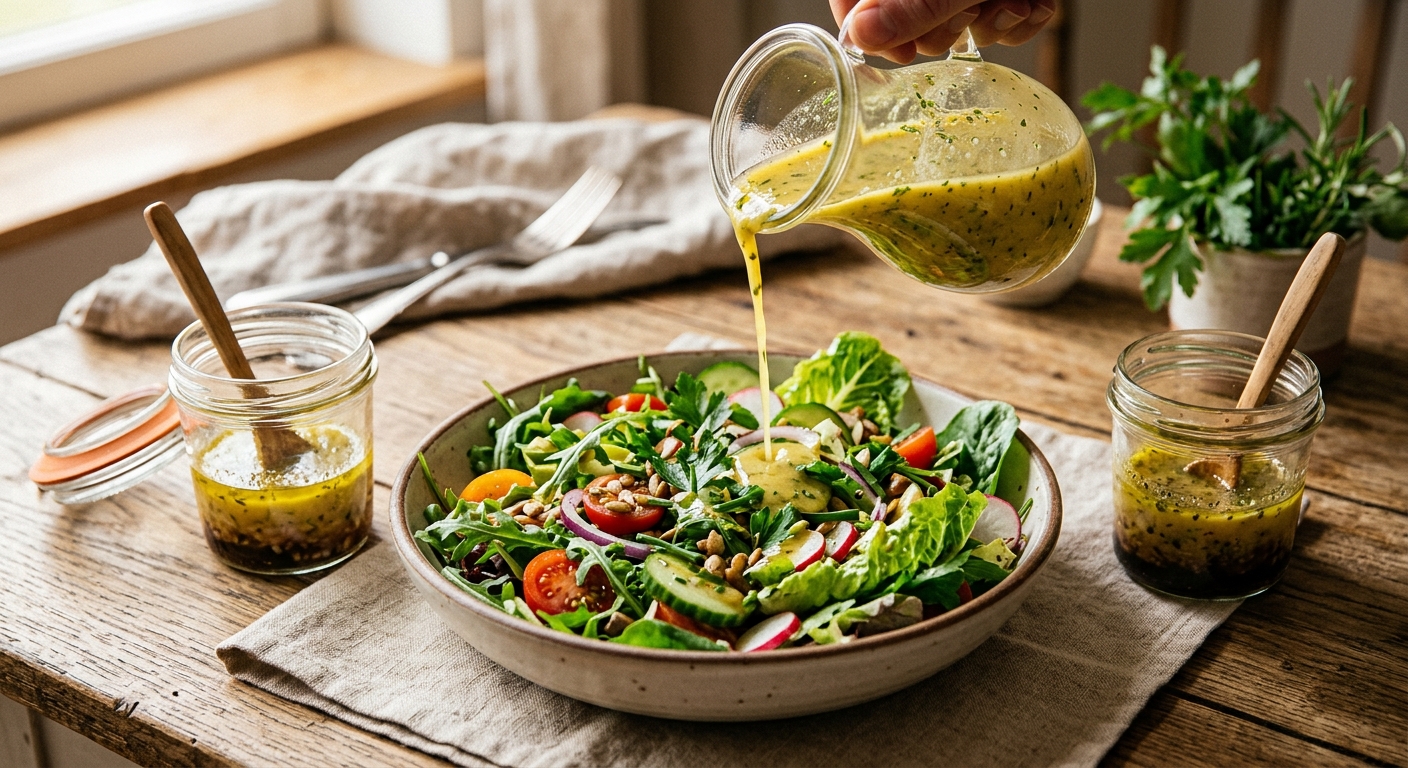
A well‑made dressing can turn a salad from a chore into something you actually want to eat. The classic ratio is three parts oil to one part acid, with mustard to emulsify and salt to wake everything up. Always taste it on an actual leaf — not on a spoon — because the leaf changes the flavour. A good dressing should enhance, not dominate.
Ingredients
6 tbsp extra-virgin olive oil; 2 tbsp red wine vinegar; 1 tsp Dijon mustard; 1 small clove garlic, crushed; ½ tsp caster sugar; salt and black pepper to taste; 150 g radicchio, leaves separated; 100 g frisée or chicory, roughly torn.
Kitchen Table
A tailored kitchen-material list is being prepared for this recipe.
Method
- Put the mustard, vinegar, garlic, and sugar into a small bowl or jar. Add a good pinch of salt and a few grinds of black pepper. Mix briefly — this is your base.
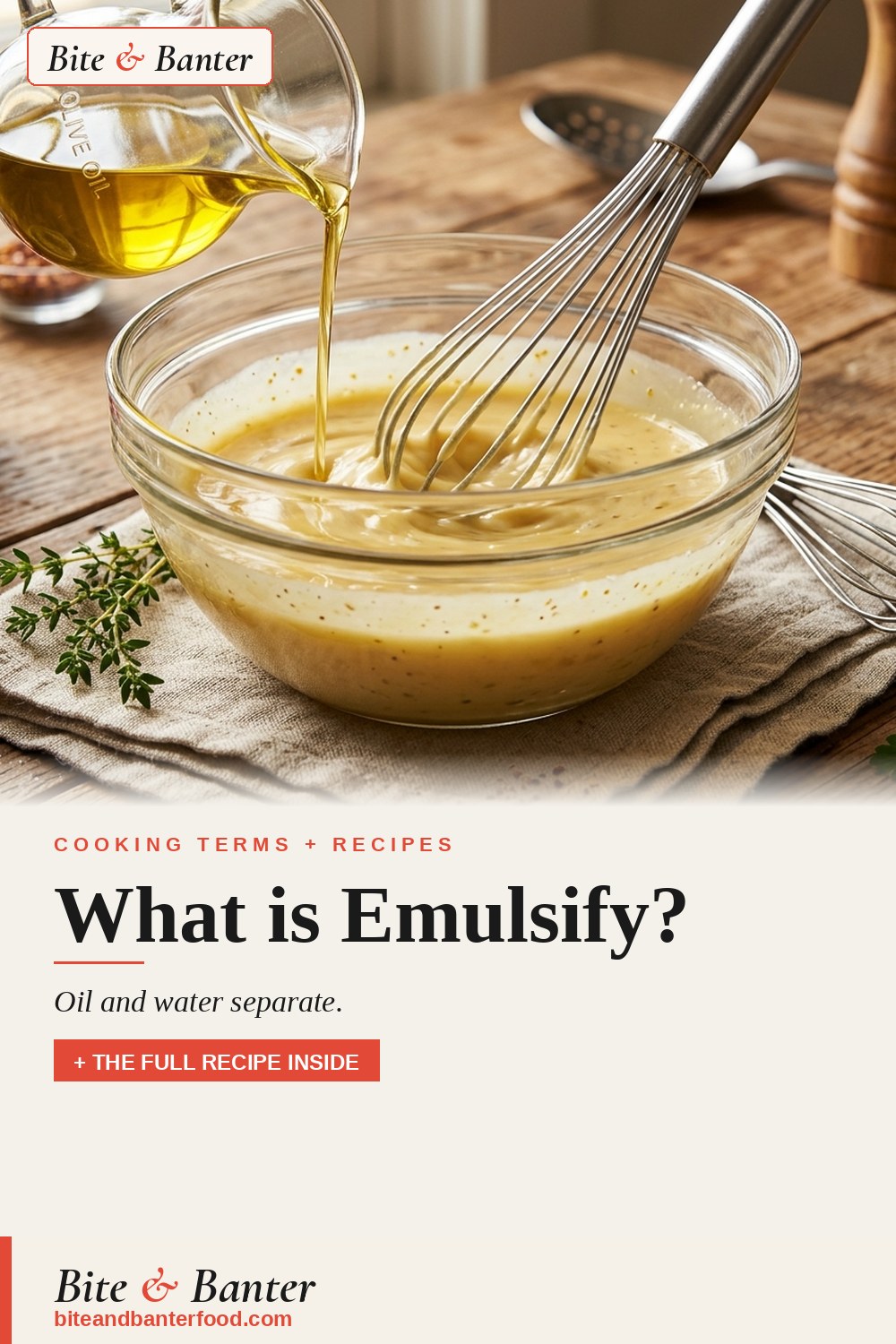
- Pour in the olive oil slowly, whisking as you go. The mustard will hold things together. Keep whisking until the dressing looks cohesive and slightly thickened. This is what emulsified means. It is worth knowing.
- Tear a leaf from the radicchio. Dip it into the dressing. Taste it. Adjust — more vinegar if it feels flat, more oil if it feels sharp, more salt if it feels like nothing. Do this on the leaf, not on a spoon. The leaf tells you the truth.
- Place the radicchio and frisée in a large bowl. Do not pack them in — they need room to be dressed, not smothered.
- Pour roughly two-thirds of the dressing over the leaves. Toss gently using your hands or two large spoons, turning until every leaf is lightly coated. Add more dressing if needed. Stop before it pools at the bottom.
- Serve immediately. A dressed salad waits for no one — least of all the people who arrived late.
Critical Points — The WOW Factor
Chef's critical points and the wow-factor tagline for this recipe are being written and will appear here soon.
— A dressing is not an afterthought — it is the entire argument, made in a jar.
From the Bite & Banter Pinterest kitchen