Pesto with Trofie Pasta
Made properly, it requires no heat. That is either its charm or its problem, depending on your patience.

Definition
The name comes from the Italian word pestare — to pound — because it was traditionally made in a mortar and pestle. The friction and pressure of pounding rather than blending produce a different texture and a slightly less oxidised result. A blender works fine for everyday use, but the mortar version is noticeably better. Pesto made with very fresh basil, good Parmesan, and enough salt is extraordinary.
Ingredients
400 g trofie pasta (or linguine); 60 g fresh basil leaves, packed; 40 g pine nuts; 2 cloves garlic, peeled; 60 g Parmesan, finely grated, plus extra to serve; 90 ml good olive oil; 1 pinch flaky sea salt.
Kitchen Table
A tailored kitchen-material list is being prepared for this recipe.
Method
- Toast the pine nuts in a dry pan over a medium heat for two to three minutes — just until golden. Watch them. They go from golden to ruined with almost no warning.
- If using a mortar and pestle, begin with the garlic and salt. Pound until you have a rough paste. Add the basil in two or three batches, pounding and grinding with a circular motion rather than stabbing at it. Add the pine nuts and reduce them to a coarse, slightly gritty texture. Stir in the Parmesan, then add the oil gradually, working it in. If using a blender, combine everything except the oil, pulse briefly, then pour the oil in steadily. Both methods work. One of them is noticeably better.
- Taste the pesto before the pasta is anywhere near ready. It should be savoury, grassy, and rich — with salt you can actually detect. Adjust now.
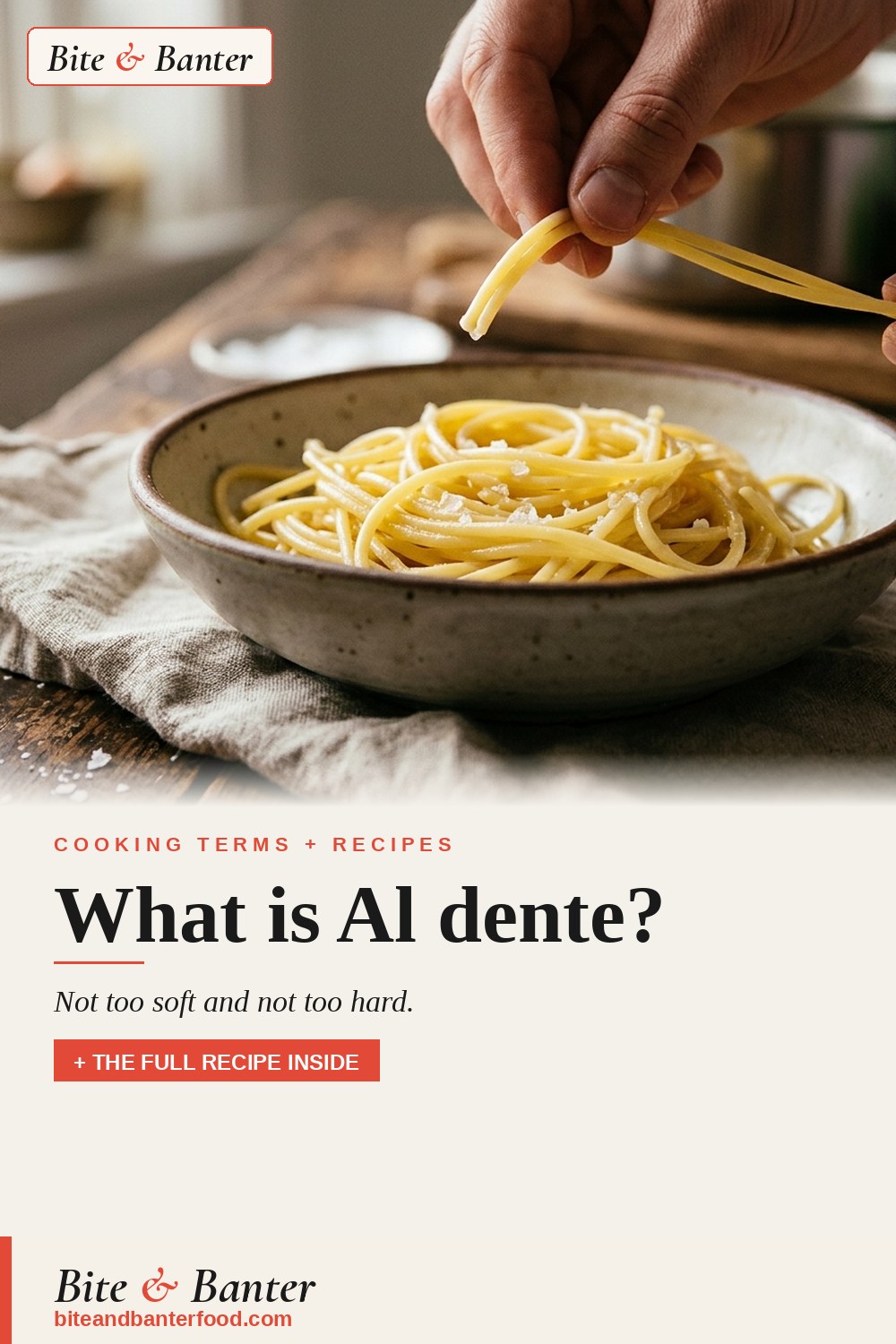
- Cook the pasta in generously salted boiling water until al dente. Reserve a full cup of the cooking water before you drain anything.
- Drain the pasta and return it to the warm pan off the heat. Add the pesto and two or three tablespoons of the reserved cooking water. Toss well — the starchy water loosens the sauce and helps it coat every piece without the oil separating.
- Serve immediately with extra Parmesan over the top. Pesto does not improve with waiting.
Critical Points — The WOW Factor
Chef's critical points and the wow-factor tagline for this recipe are being written and will appear here soon.
— The mortar and pestle has been doing this job since the fourteenth century — it does not need your encouragement, but it does deserve your respect.
From the Bite & Banter Pinterest kitchen