Potage Bonne Femme
The soup that fed Europe before anyone thought to add a first course before the first course

Definition
The ancestor of most soups in Western cooking. A potage is not delicate — it is nourishing, substantial, and meant to be a proper course rather than a preamble. In historical cooking, it was often the main meal itself. On a modern menu, it usually refers to a thick, smooth, or chunky soup made with vegetables, pulses, or both, properly seasoned and served hot.
Ingredients
50 g unsalted butter; 3 medium leeks, white and pale green parts only, sliced; 500 g floury potatoes, peeled and roughly chopped; 1.2 litres good chicken or vegetable stock; 1 bay leaf; 100 ml double cream; to taste salt and white pepper; small handful fresh flat-leaf parsley, finely chopped.
Kitchen Table
A tailored kitchen-material list is being prepared for this recipe.
Method
- Melt the butter in a large, heavy-bottomed saucepan over a low heat. Add the leeks with a pinch of salt and cook gently for 10 minutes, stirring occasionally, until thoroughly softened but not coloured. This is not a step to rush.
- Add the potatoes and the bay leaf. Stir to coat everything in the butter, then pour in the stock. Bring to a gentle boil.
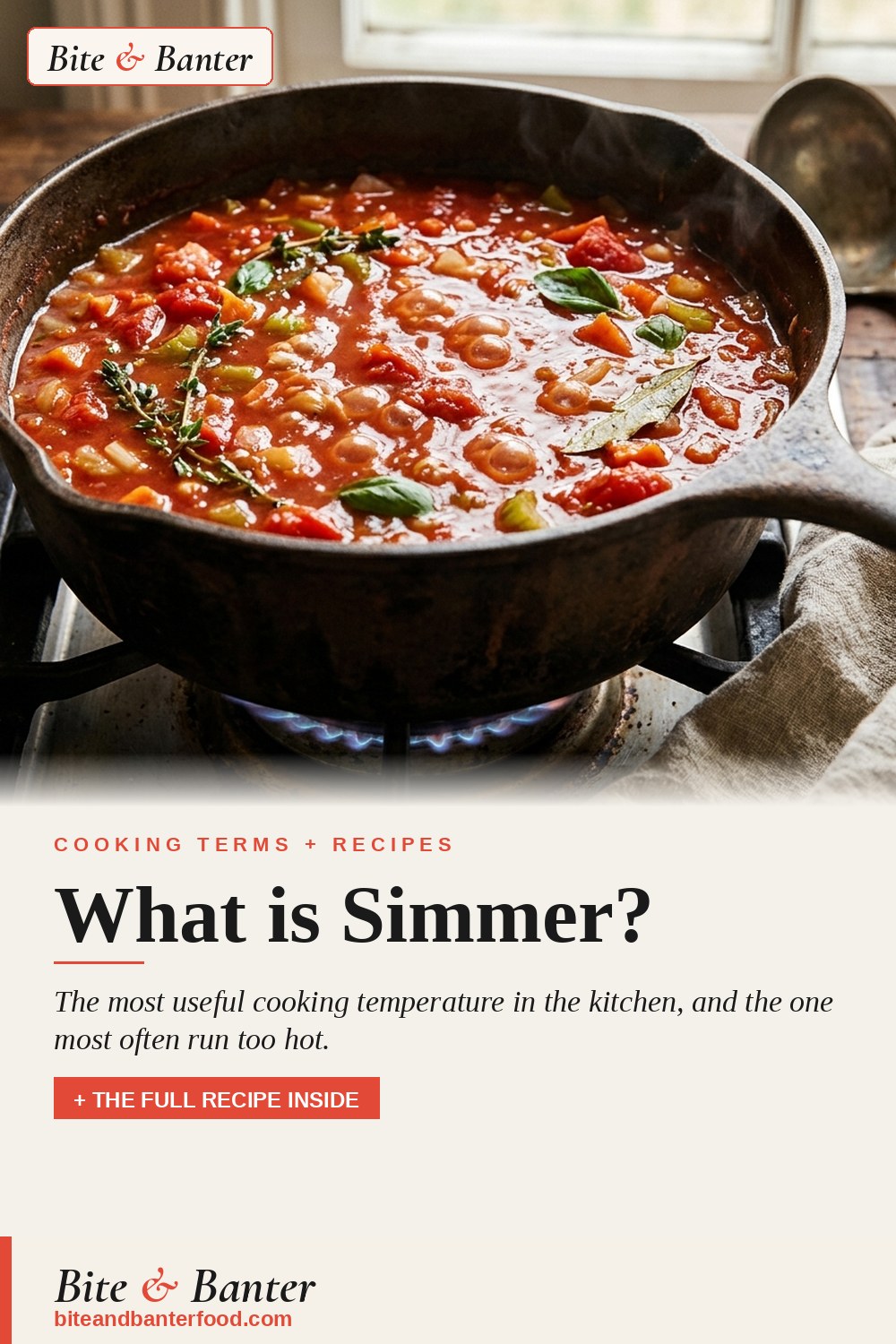
- Reduce the heat and simmer, partially covered, for 25 minutes — until the potatoes are completely tender and beginning to collapse into the liquid. Remove the bay leaf.
- Use a stick blender to purée the soup directly in the pan. You are aiming for smooth and thick — substantial enough to feel like a meal, not a suggestion. If it seems too thick, add a little hot water or stock and blend again.
- Stir in the cream. Taste carefully and season with salt and white pepper. Reheat gently without boiling.
- Ladle into warmed bowls, scatter parsley over the top, and serve immediately with good bread alongside — bread is not optional here, it is structurally necessary.
Critical Points — The WOW Factor
Chef's critical points and the wow-factor tagline for this recipe are being written and will appear here soon.
— Centuries of European peasantry ate this for dinner and called it enough — they were, on balance, correct.
From the Bite & Banter Pinterest kitchen