Roasted Carrots with Honey and Tahini Drizzle
Two drizzles, one dish — proof that finishing matters as much as cooking
Definition
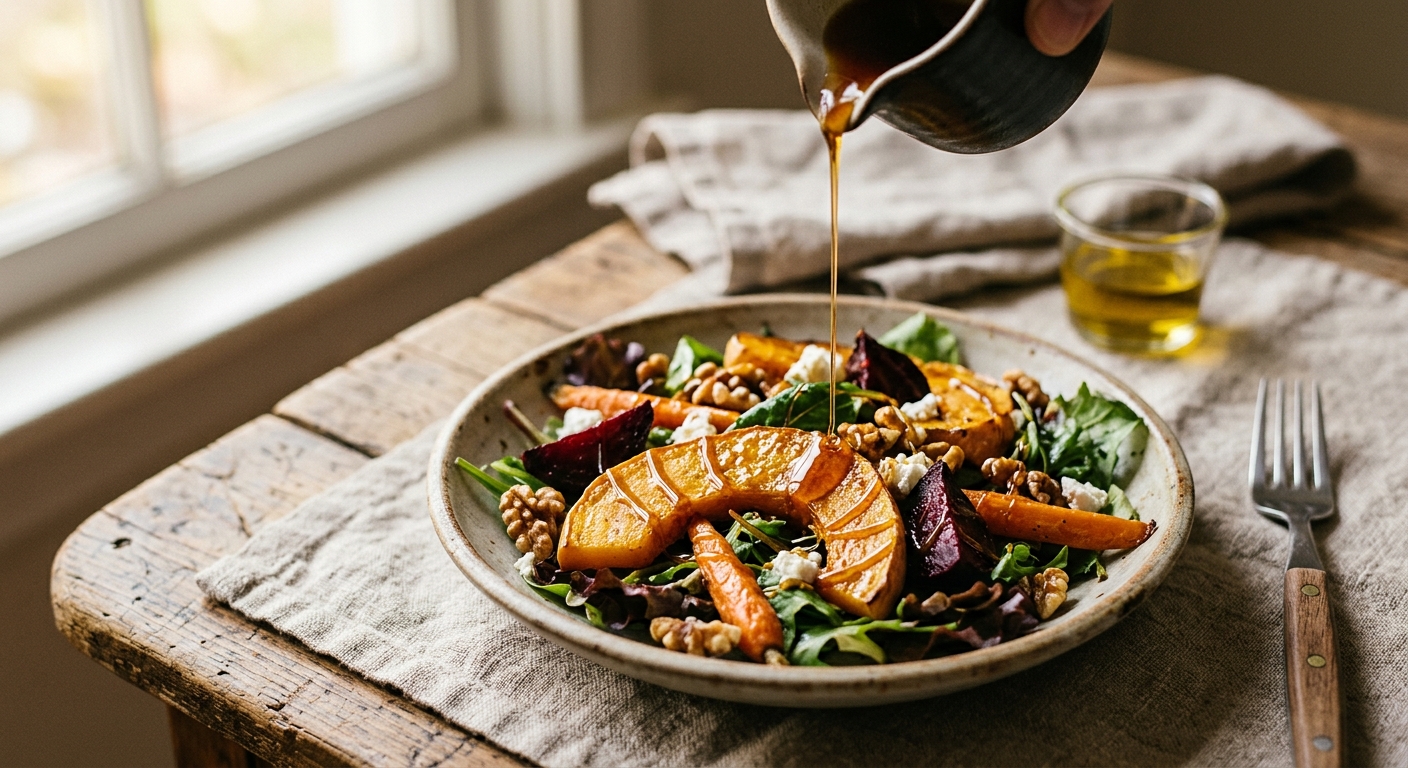
A drizzle is the final flourish that makes a dish look cared for. Olive oil on soup, honey on cheese, balsamic on salad — each adds flavour and gloss. The key is restraint: a drizzle is not a pour. Too much and you drown the dish; just enough and you elevate it.
Ingredients
700 g carrots, scrubbed and halved lengthways; 3 tbsp olive oil; 1 tsp ground cumin; 2 tbsp tahini; 1 tbsp lemon juice; 2 tbsp runny honey; a small handful flat-leaf parsley, roughly chopped; salt and black pepper to season.
Kitchen Table
A tailored kitchen-material list is being prepared for this recipe.
Method
- Heat your oven to 200°C. Arrange the carrots cut-side up on a large roasting tray — do not crowd them. Crowded carrots steam. You want them to roast.
- Drizzle with the olive oil — a slow, thin, deliberate stream from a height. Turn the carrots to coat. Season well with salt, pepper and the cumin.
- Roast for 30 to 35 minutes until the edges are catching colour and the centres are tender when pierced with a knife. Do not check them every five minutes.
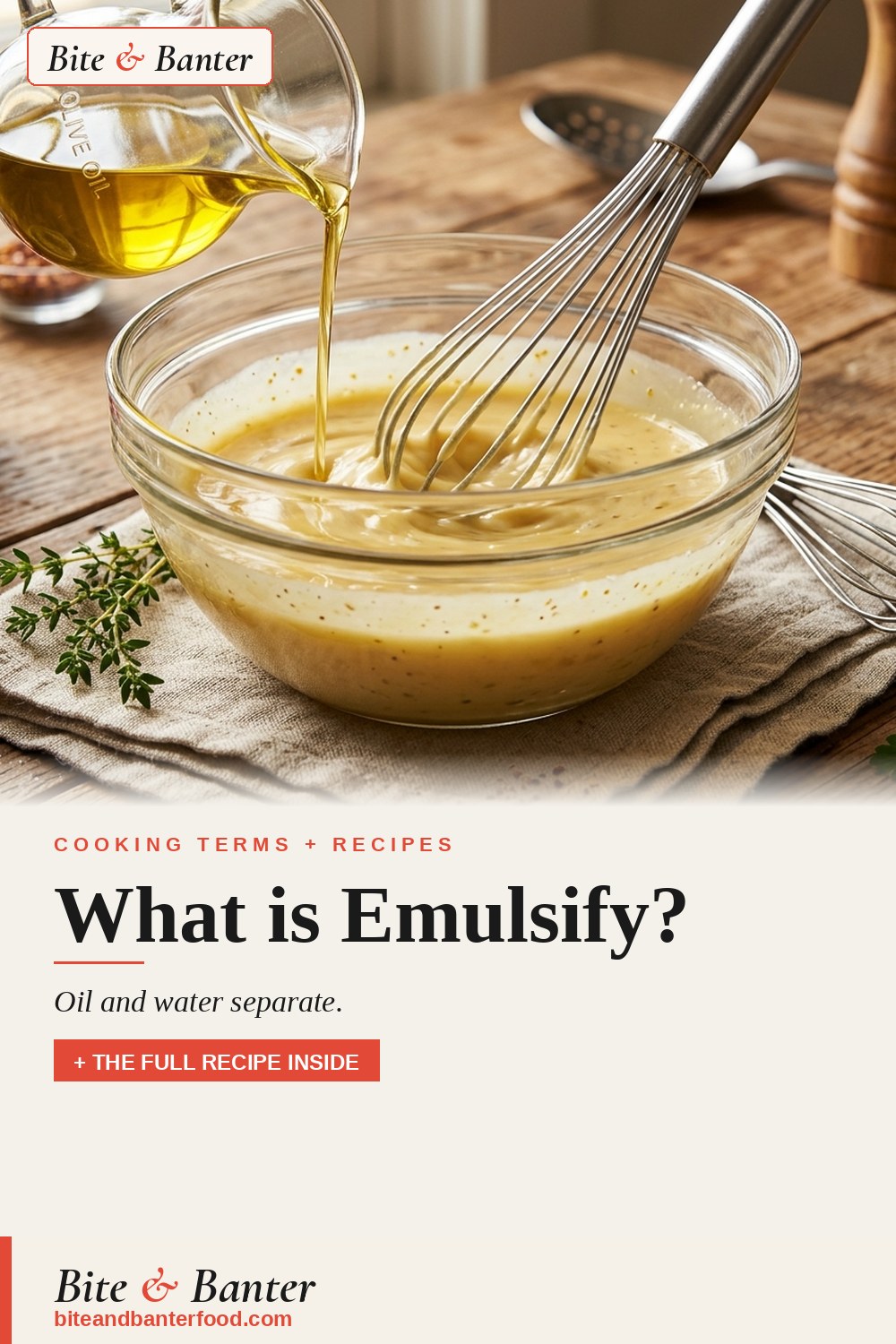
- While the carrots roast, mix the tahini with the lemon juice and two tablespoons of cold water until it loosens to a pourable consistency. It will seize up first — keep stirring. It knows what it is doing.
- Arrange the hot carrots on a serving plate. Drizzle the tahini in a thin, unhurried zigzag across them — this is not a sauce, it is an accent. Then drizzle the honey over the top in exactly the same manner.
- Scatter the parsley over everything and serve immediately. The two drizzles should remain visible — distinct, considered, not pooled together in a muddle. That distinction is the point.
Critical Points — The WOW Factor
Chef's critical points and the wow-factor tagline for this recipe are being written and will appear here soon.
— A drizzle takes three seconds and is the difference between a dish that looks cooked and one that looks finished — which is, in the end, a rather large difference.
From the Bite & Banter Pinterest kitchen