Yesterday's Ratatouille, Warmed Through Properly
The second day is always better — if you don't ruin it with impatience

Definition
The instruction that sounds obvious and goes wrong most often when people are in a hurry. Warming through means the food reaches a safe serving temperature all the way to the middle — not just hot on the outside and cold in the centre. Low heat and patience work for most things. A covered pan with a splash of liquid prevents drying. A low oven at around 150 degrees works for larger items. The microwave works for speed but not always for quality.
Ingredients
1 batch leftover ratatouille, refrigerated; 3 tbsp olive oil; 2 tbsp water or vegetable stock; 1 sprig fresh thyme; 1 clove garlic, thinly sliced; to taste salt and black pepper; small handful fresh basil leaves, to finish.
Kitchen Table
A tailored kitchen-material list is being prepared for this recipe.
Method
- Take the ratatouille out of the refrigerator at least 15 minutes before you begin. Cold food placed directly onto heat warms unevenly — hot at the edges, stubbornly cold in the middle. You have been warned.
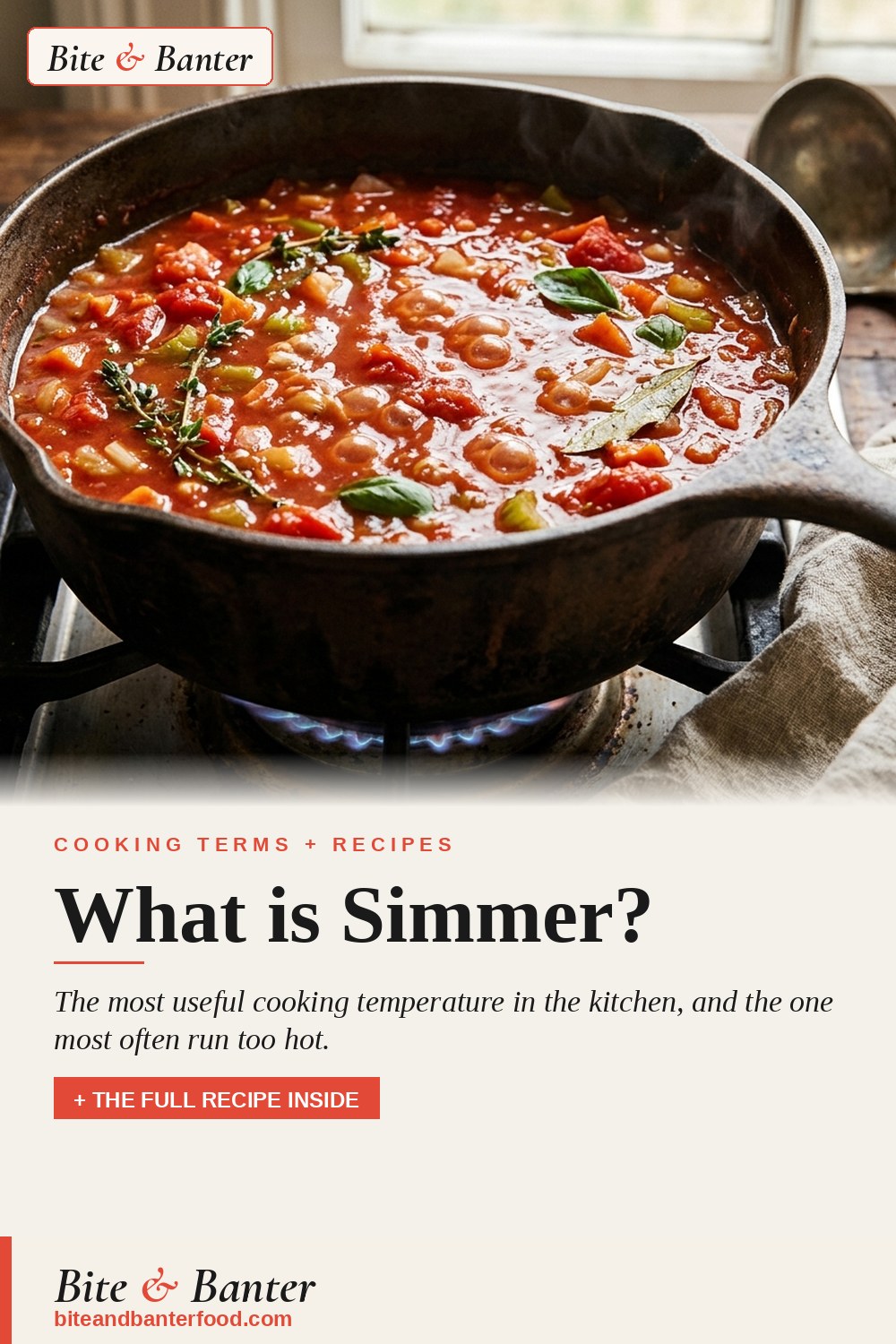
- Set a wide, heavy pan over the lowest heat you have. Add the olive oil, garlic, and thyme. Let them sit quietly for two minutes — you are coaxing flavour back into something that has been sleeping, not frying anything.
- Add the ratatouille and the water or stock. The liquid is not an afterthought — it creates a gentle steam that carries heat inward and stops the vegetables from catching or drying out.
- Place a lid on the pan, slightly ajar. Leave it on low heat for 12 to 15 minutes. Do not stir frantically. Check it once at the halfway point, stir gently, replace the lid.
- Test the temperature properly — press a spoon into the centre of the dish and hold it against your wrist. It should feel genuinely hot, not merely warm. If it does not, give it another five minutes with the lid on.
- Taste and adjust the seasoning. Reheated food almost always needs a little more salt than it did the first time. Scatter the basil over the top and serve immediately — on toast, alongside eggs, or as a side to grilled lamb.
Critical Points — The WOW Factor
Chef's critical points and the wow-factor tagline for this recipe are being written and will appear here soon.
— Food reheated in a hurry tastes exactly like that — a hurry.
From the Bite & Banter Pinterest kitchen